 Whatsable







TL;DR:
- Using WhatsApp for HR improves communication speed with frontline workers, especially for quick updates and scheduling. However, legal risks and data privacy concerns necessitate clear policies, employee consent, and proper tools like the WhatsApp Business API. Effective HR communication integrates WhatsApp as a complementary tool within a structured system to ensure compliance and reliable documentation.
WhatsApp for HR communication explained simply means using one of the world’s most popular messaging apps to manage internal team coordination, employee engagement, and operational updates. Most HR leaders assume it’s a natural fit because their employees are already on it. That assumption is partly right. WhatsApp does solve real problems quickly. But the legal exposure, data risks, and compliance gaps that come with informal use create serious problems that most HR teams don’t discover until something goes wrong. This article gives you the full picture.
Table of Contents
- Key takeaways
- Practical uses of WhatsApp in HR communication
- Legal and compliance risks you cannot ignore
- Technical options for scaling WhatsApp in HR
- When to use alternatives and how to layer your tools
- My take on WhatsApp and HR professionalism
- How Whatsable makes WhatsApp work for HR at scale
- FAQ
Key takeaways
| Point | Details |
|---|---|
| WhatsApp works for quick updates | Use it for shift reminders, pulse surveys, and onboarding coordination rather than formal HR processes. |
| Legal risks are real and costly | Informal messages lack evidentiary reliability, and emoji-filled dismissal chats have already triggered employment disputes. |
| WhatsApp Business API is the safe path | It provides integrations, security controls, and automation missing from the standard consumer app. |
| Compliance requires written policy | Define acceptable use, get employee consent, and set clear boundaries before rolling WhatsApp into HR workflows. |
| Layer your tools intentionally | WhatsApp should complement your HRIS and formal HR systems, not replace them. |
Practical uses of WhatsApp in HR communication
HR communication via WhatsApp works best when the goal is speed over formality. If you run a retail chain, a logistics operation, or any workforce where employees are rarely sitting at a desk, WhatsApp solves the “how do I reach them right now?” problem better than email ever will.
Here is where organizations are seeing the most traction:
- Shift and schedule coordination. Group chats let supervisors push last-minute schedule changes to an entire team in seconds, with voice notes adding clarity that a text message can’t.
- Onboarding reminders. New hires respond to WhatsApp messages at dramatically higher rates than email. HR teams use it to send document checklists, first-day logistics, and quick welcome videos.
- Interview scheduling. WhatsApp Business API enables automation of interview confirmation messages, reminders, and rescheduling links integrated directly into your applicant tracking system.
- Pulse surveys and feedback collection. Short, conversational surveys sent over WhatsApp produce higher completion rates than traditional survey platforms because the friction is almost zero.
- Policy updates and quick announcements. Broadcasting a new safety protocol or a benefits enrollment deadline takes seconds and lands in a channel employees already check dozens of times a day.
The medium matters here. WhatsApp supports images, PDFs, voice notes, and interactive action buttons through the API. That versatility makes it genuinely useful for training reminders, compliance acknowledgments, and operational alerts that would get buried in an email inbox.
Pro Tip: Use WhatsApp for deskless and shift workers specifically. This demographic has the lowest email open rates in the workforce. Meeting them where they already are is not a shortcut. It is the right strategy.
The WhatsApp benefits for HR come down to one thing: reach. No other channel gets you to frontline, mobile, and remote workers this fast and this reliably.

Legal and compliance risks you cannot ignore
This is where most HR teams underestimate the tool. Using WhatsApp for HR is not inherently dangerous, but using it carelessly absolutely is.
“WhatsApp messages can be deleted or edited at any time by participants, making them unreliable as evidence in tribunals or audits.” Source: Clarkslegal LLP
Consider what happened in 2026. A Fair Work Commission ruling confirmed that a WhatsApp message was not a formal firing because the language was ambiguous and the format carried no legal weight. Emojis, informal phrasing, and conversational tone stripped the message of the precision required for a lawful dismissal. That case cost the employer time, legal fees, and a damaged reputation.
The GDPR dimension is equally serious. WhatsApp messages are stored on personal devices, not company servers. There is no audit trail, no way to enforce data deletion, and no central access control. The Italian Data Protection Authority demonstrated how severe this can get when it fined €420k over the misuse of WhatsApp messages in disciplinary proceedings.
Privacy risk is not just theoretical either. Using personal WhatsApp accounts for work means employees’ personal phone numbers are visible to everyone in a group chat. You cannot hide numbers, you cannot control who adds participants, and you cannot prevent screenshots. For employees, that boundary erosion is a real concern. For HR, it is a liability.
Pro Tip: Before you put any employee on a WhatsApp work group, get written consent. Explicit employee consent for using personal numbers in work communication is not optional under GDPR. Record it, date it, and store it in your HRIS.
The cleanest path forward is a formal communication policy. Outright bans on WhatsApp for work are usually unenforceable and counterproductive, especially in SME settings where WhatsApp is already deeply embedded in team culture. Instead, define clearly what WhatsApp can and cannot be used for, train your managers on those boundaries, and make sure your policy specifies that no formal HR actions (warnings, terminations, performance reviews) are ever conducted through chat.
Technical options for scaling WhatsApp in HR
Not all WhatsApp tools are equal. HR professionals considering using WhatsApp at scale need to understand the difference between the standard consumer app, the WhatsApp Business App, and the WhatsApp Business API.
| Tool | Best for | Key limitations |
|---|---|---|
| WhatsApp (consumer) | Informal team chats, small groups | No business features, data stays on personal devices |
| WhatsApp Business App | Small businesses, single-user management | No multi-user access, limited automation |
| WhatsApp Business API | Enterprise HR workflows, HRIS integration | Requires a Business Solution Provider, setup complexity |
The API is where serious HR use cases live. It supports 99.9% uptime and sub-500ms delivery, which matters when you are sending time-sensitive shift alerts or safety notifications to hundreds of employees. Unlike the consumer app, the API allows multiple HR team members to access the same number, automate message flows, and log interactions in a centralized system.
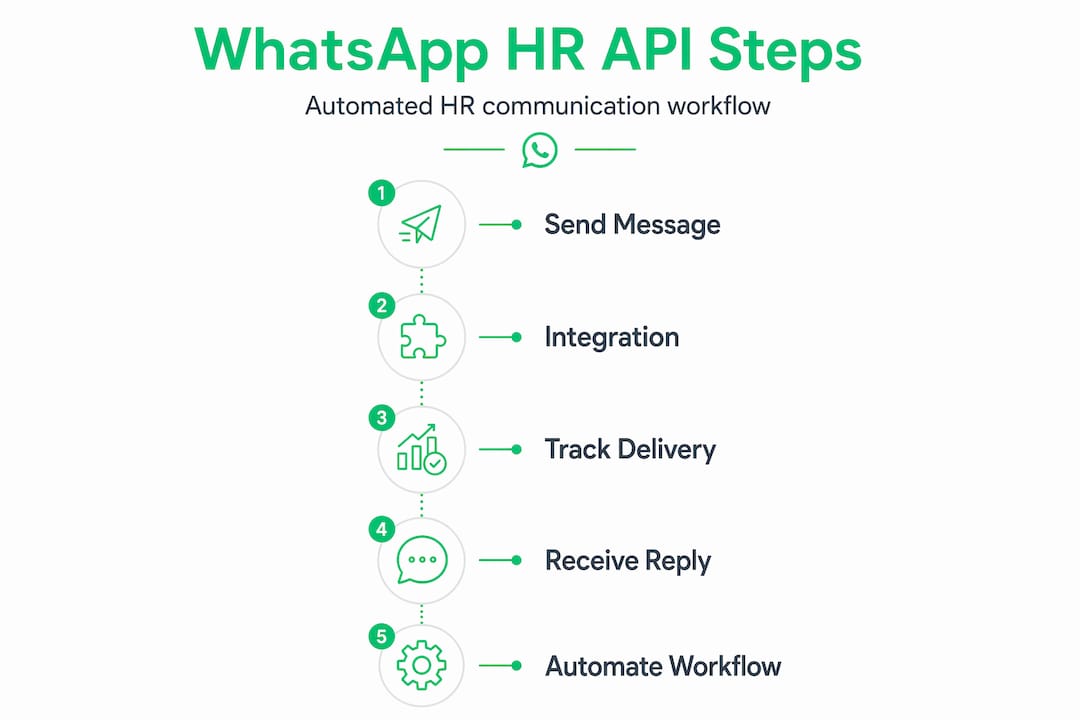
Integration is the other major differentiator. The API integrates with HRIS systems to automate onboarding sequences, interview reminders, and policy acknowledgment workflows. When a new hire is added to your HRIS, the onboarding WhatsApp flow can trigger automatically. That removes manual effort and reduces the chance of someone slipping through the cracks.
For HR teams currently using personal WhatsApp accounts to manage work communication, the immediate priority is migrating to an official business tool. Issue company-owned devices or, at a minimum, register a dedicated company WhatsApp number managed through the Business API. That single step dramatically reduces privacy exposure and gives you a foundation for proper data governance.
When to use alternatives and how to layer your tools
WhatsApp is not trying to replace Microsoft Teams or Slack. It should not replace your HRIS. Understanding where it fits in your communication stack prevents both underuse and overreach.
Instant messaging platforms should be treated as conversational layers, not systems of record. WhatsApp is excellent at starting a conversation and delivering time-sensitive information. It is not designed for storing decisions, maintaining audit trails, or managing formal HR documentation.
Here is how WhatsApp compares to other tools HR teams commonly use:
| Tool | Strengths | Where it falls short |
|---|---|---|
| High engagement, mobile-first, multimedia | No audit trail, compliance gaps, 1,024-member group cap | |
| Microsoft Teams | Document management, compliance features | Low adoption among deskless workers |
| Slack | Integrations, searchable history | Subscription cost, limited for non-office workers |
| Dedicated HR platforms | Full compliance, formal process support | Slower adoption, higher friction for quick updates |
Note that group chats are capped at 1,024 members and offer no reliable read receipts at scale. For emergency broadcasts to a workforce of several thousand, WhatsApp alone will not cut it.
The organizations using WhatsApp most effectively are the ones who treat it as one layer in a broader stack. They use WhatsApp for fast, conversational outreach to frontline workers while maintaining a formal HRIS for records, a dedicated platform for compliance-sensitive communication, and a tool like Evy for HR teams to keep hiring workflows structured and documented.
The critical HR-specific need that WhatsApp does not address is ensuring that the right message reaches every relevant person with a verifiable record. Shift the formal and sensitive work to tools built for it. Let WhatsApp do what it does best.
My take on WhatsApp and HR professionalism
I’ve watched HR teams make two opposing mistakes with WhatsApp. The first is refusing to use it at all because it feels unprofessional. The second is using it for everything because it feels easy.
Both approaches create problems. In my experience, the organizations that get this right treat WhatsApp the way a good craftsperson treats the right tool for the right job. A quick “your onboarding docs are ready, click here” message belongs on WhatsApp. A performance improvement plan does not. That distinction sounds obvious until you are under deadline pressure and tempted to fire off a quick message instead of logging into your HRIS.
What I’ve learned from watching real employment disputes unfold is that the damage rarely comes from a single catastrophic WhatsApp blunder. It comes from improper use patterns that accumulate over months. Managers who get used to handling sensitive conversations through chat. HR teams who never document the “quick chats” that actually carry legal weight. Organizations that assume the informality of the medium protects them when it does the opposite.
My honest recommendation is to build a one-page WhatsApp use policy before you roll it out formally. Tell your managers what it is for, what it is not for, and exactly what to do when a conversation starts heading into formal HR territory. That document will save you more trouble than any platform upgrade. Training and clear protocols are not a nice-to-have. They are the entire difference between WhatsApp being an asset and a liability.
— Axel
How Whatsable makes WhatsApp work for HR at scale
If the compliance and scaling challenges outlined above sound familiar, Whatsable was built specifically to address them. Standard WhatsApp lacks message archiving, centralized access controls, and the automation infrastructure that growing HR teams need to communicate safely and efficiently.
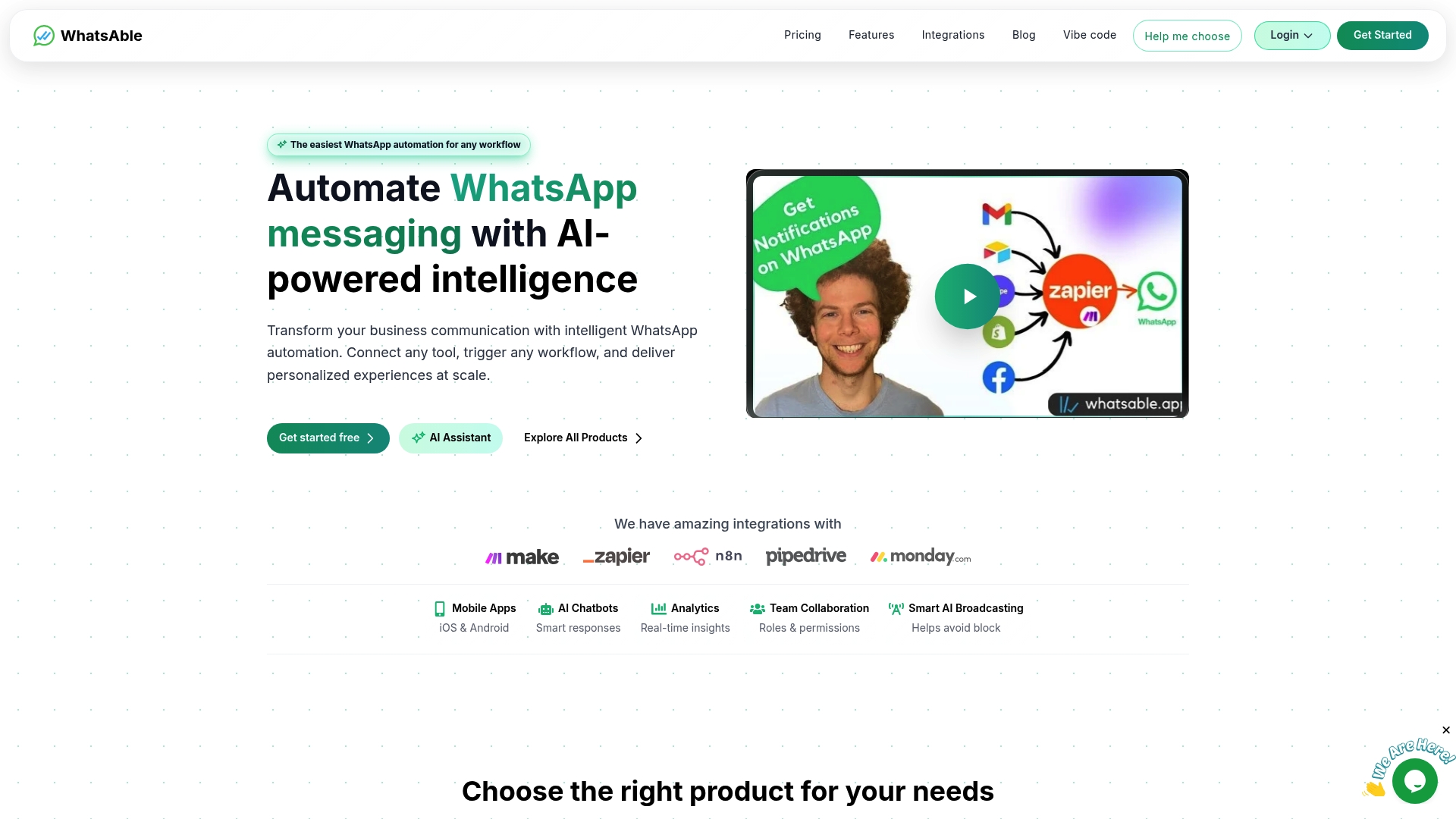
Whatsable gives HR and operations teams the ability to send automated, branded WhatsApp messages with full workflow integration through tools like Zapier, Make, n8n, and Pipedrive. The Whatsable Bot handles internal team notifications and alerts with quick setup, so your HR workflows stay on schedule without manual follow-up. For enterprises that need a fully customized solution, the Whatsable Whitelabel platform lets you deploy a branded communication tool with the controls your compliance team actually requires. Move beyond the limitations of consumer WhatsApp and give your HR team infrastructure that holds up under scrutiny.
FAQ
What is WhatsApp for HR communication?
Using WhatsApp for HR communication means leveraging the messaging platform to handle internal team coordination, employee updates, onboarding, and scheduling. It works best as a fast, conversational channel for frontline and deskless workers rather than a replacement for formal HR systems.
Is WhatsApp legally safe for HR teams to use?
WhatsApp carries real legal risks when used for formal HR processes like dismissals or warnings. Messages can be deleted, lack an audit trail, and have already triggered regulatory fines and employment tribunal disputes.
What is the difference between WhatsApp Business App and the API?
The WhatsApp Business App suits small, single-user operations. The WhatsApp Business API is designed for enterprise use, supporting multi-user access, HRIS integration, automation, and security controls that the standard app cannot provide.
Do employees need to consent to WhatsApp communication for work?
Yes. Under GDPR, employers must obtain explicit written consent before using personal WhatsApp numbers for work communication. That consent must be documented and stored with a date and record of what was agreed.
Should HR replace email with WhatsApp?
No. WhatsApp should complement existing communication tools, not replace them. Use it for quick, time-sensitive updates to mobile and deskless workers while keeping formal HR records, compliance documentation, and sensitive conversations in dedicated HR systems.
 Elias Navarro