 Whatsable






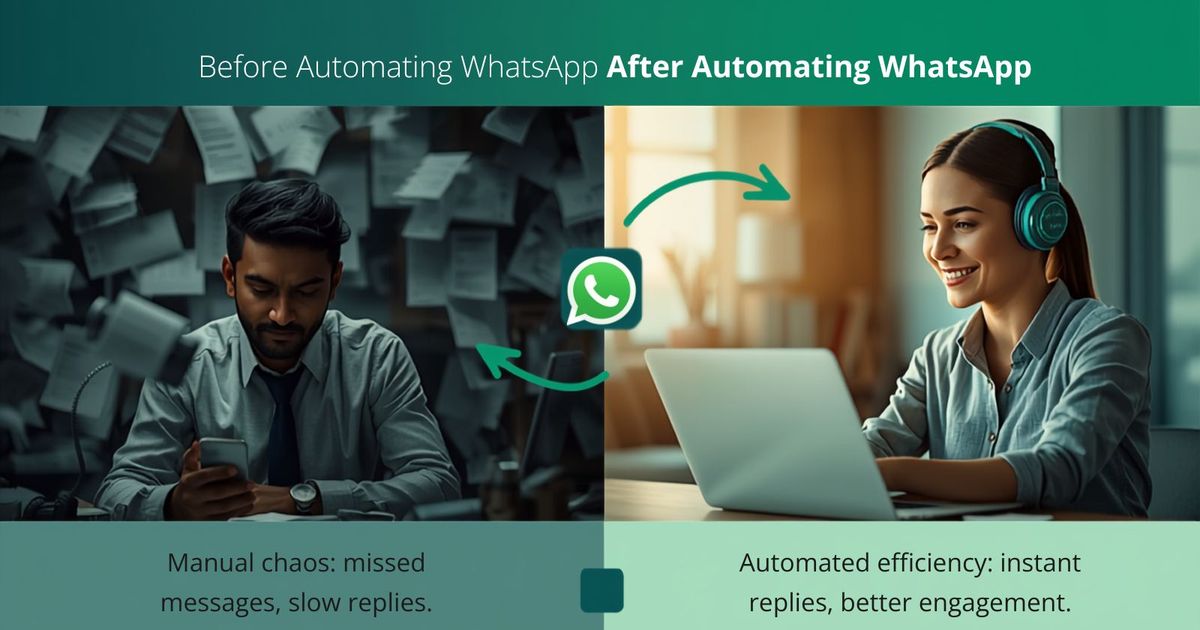
Most small businesses do not have a WhatsApp problem. They have a "too many messages, not enough hours" problem, and WhatsApp is simply where it shows up.
The channel your customers love is the same channel quietly eating your day. Every order update, every "are you open?", every "did my payment go through?" lands in the same inbox, and someone has to answer all of it by hand.
This is the story of what changes when you stop doing that. Not the feature list, but the day-to-day reality: what your business feels like before you automate WhatsApp, and what it feels like after.
Before: the inbox runs you
You start the day already behind. Overnight, messages stacked up. A few of them were people ready to buy, and by the time you reply, they have moved on to a competitor who answered faster.
You open the same conversations you have opened a hundred times: "Has my order shipped?", "What are your hours today?", "Can I still get the discount?" So you type the same answers again. You copy a tracking link from one tab and paste it into a chat. You tell yourself you will follow up with that warm lead later, and then the next message arrives, and later never comes.
A few patterns tend to repeat in the "before" world:
- The same handful of questions eat most of your replying time
- Order confirmations, reminders, and follow-ups all depend on a human remembering to send them
- One person holds the entire inbox in their head, so a day off feels risky
- Response time slips from minutes to hours, and speed is often what closes the sale
- Growth makes everything worse, because more customers means more manual messages
Here is the important part: none of this is a discipline problem. You are not failing to try hard enough. It is a volume problem, and you cannot out-hustle volume forever. Every new customer adds to the pile, so the harder you work, the more work appears.
That is the ceiling almost every growing business hits. The thing that made you great, personal and responsive service, becomes the thing that holds you back.
After: the channel runs itself
Automating WhatsApp does not mean replacing the human touch. It means taking the messages that never needed a human in the first place and letting them send on their own, so your team can spend its energy where it actually counts.
Picture the same business a month after making the switch.
- Order confirmations and shipping updates go out the moment an order's status changes, no copy-paste required
- Reminders and follow-ups fire on a schedule instead of relying on someone's memory
- Customers get an instant first reply, even at midnight, so nobody waits until morning for a simple answer
- Your CRM and your other tools talk to WhatsApp directly, so information never gets typed twice
- Your team focuses on the conversations that genuinely need judgment, empathy, and a human voice
The inbox stops being a source of dread and becomes a system. Messages go out on time, every time, whether you are at your desk, asleep, or on holiday. The bottleneck disappears, because the routine work no longer depends on any single person being awake and available.
And customers notice. A business that replies instantly and keeps them updated at every step feels bigger, more organized, and more trustworthy than one that goes quiet for hours. You do not just save time. You look more professional while doing it.
Why WhatsApp is the channel worth automating first
You might automate email, SMS, or a dozen other tools. Why start with WhatsApp?
Because WhatsApp gets read. Email often gets ignored, buried, or filtered into a promotions tab nobody opens. WhatsApp messages, by contrast, tend to get opened almost immediately. Across the industry, WhatsApp regularly posts some of the highest open rates of any messaging channel, which means the reminders and updates you send there actually land in front of real people.
That is exactly why handling it manually is such a waste. You are spending your most limited resource, your attention, on the one channel that would perform even better if the messages simply went out reliably and on time. Automation does not dilute WhatsApp's strength. It amplifies it, because now every message that should go out actually does, without a person babysitting the inbox to make it happen.
There is a trust dimension too. Customers are protective of their WhatsApp. Automating it properly means using the Official WhatsApp Cloud API through an approved provider, not some workaround that risks your number getting blocked. Done right, automation makes you look more legitimate, not less.
What you can automate first
If the "before" and "after" resonate, the natural question is where to begin. You do not need to automate everything on day one. A few high-value message types tend to deliver the biggest relief right away:
- Order and booking confirmations so customers instantly know their action worked
- Shipping and delivery updates so you stop fielding "where is my order?" messages
- Payment and invoice reminders so you get paid on time without awkward chasing
- Appointment reminders so you cut no-shows without manual phone calls
- Answers to your most common questions so hours, location, and policy questions handle themselves
- Post-purchase follow-ups so you can ask for reviews or offer a repeat order automatically
Start with the messages you send most often. Those are the ones stealing the most time, and automating them frees up the biggest block of your day first.
Getting from before to after
The good news: you do not need a developer, a big budget, or a months-long rebuild to make the switch. The practical path is straightforward.
- List your repetitive messages. Write down every message you send over and over: confirmations, updates, reminders, and the questions you answer daily.
- Connect WhatsApp to where your data lives. Link it to the CRM, order system, or tools that already hold the information those messages depend on.
- Let the routine messages send themselves. Set them to trigger automatically, and keep your team on the conversations that need a real person.
That is the model behind Whatsable. It connects your business to the Official WhatsApp Cloud API, with no code required, so your order updates, reminders, and follow-ups run themselves while you stay focused on customers. As a Meta Tech Provider, Whatsable keeps you on the legitimate, approved path, so you get the automation without the risk.
The "before" is a person babysitting an inbox, always a little behind, always at risk of dropping the one message that mattered. The "after" is a channel that works while you do something else, reliably and around the clock.
Automating WhatsApp will not make your business less personal. It will free the human hours you are currently burning on copy-paste so you can spend them where they actually build relationships and revenue.
If you want to see what "after" could look like for your business, take a look at whatsable.app.

 Jonah Reed
 Elias Navarro
 Mira Okonkwo