 Whatsable







TL;DR:
- Bulk messaging allows businesses to send personalized messages at scale through SMS, MMS, or WhatsApp, with high open rates and effectiveness. Successful campaigns rely on segmentation, automation, compliance, and engaging two-way communication to maximize conversions and maintain deliverability. Proper registration, consent management, and strategic planning are essential to avoid blockers and achieve optimal results.
Bulk messaging for businesses is the practice of sending large volumes of personalized text messages via SMS, MMS, or WhatsApp to customers or prospects simultaneously. SMS open rates reach 98%, making it the highest-performing outbound channel available to any size company. Businesses that text customers are nearly 6 times more successful at reaching them than those that rely on email or phone alone. Platforms like SimpleTexting, DialPhone, and Whatsable give companies the infrastructure to send at scale without sacrificing personalization or compliance.
How does bulk messaging for businesses actually work?
Mass messaging platforms operate by connecting your contact database to a sending engine that delivers messages through carrier networks or app-based channels like WhatsApp. The mechanics are straightforward, but the features that separate good platforms from great ones go well beyond a simple send button.

Two-way messaging and shared inboxes
The best bulk messaging software treats communication as a conversation, not a broadcast. Shared team inboxes let multiple agents respond to inbound replies from a single number, so customers never feel like they are talking to a wall. This matters because a customer who replies to a promotional text and gets no response is a customer you have likely lost.
Automation and behavioral triggers
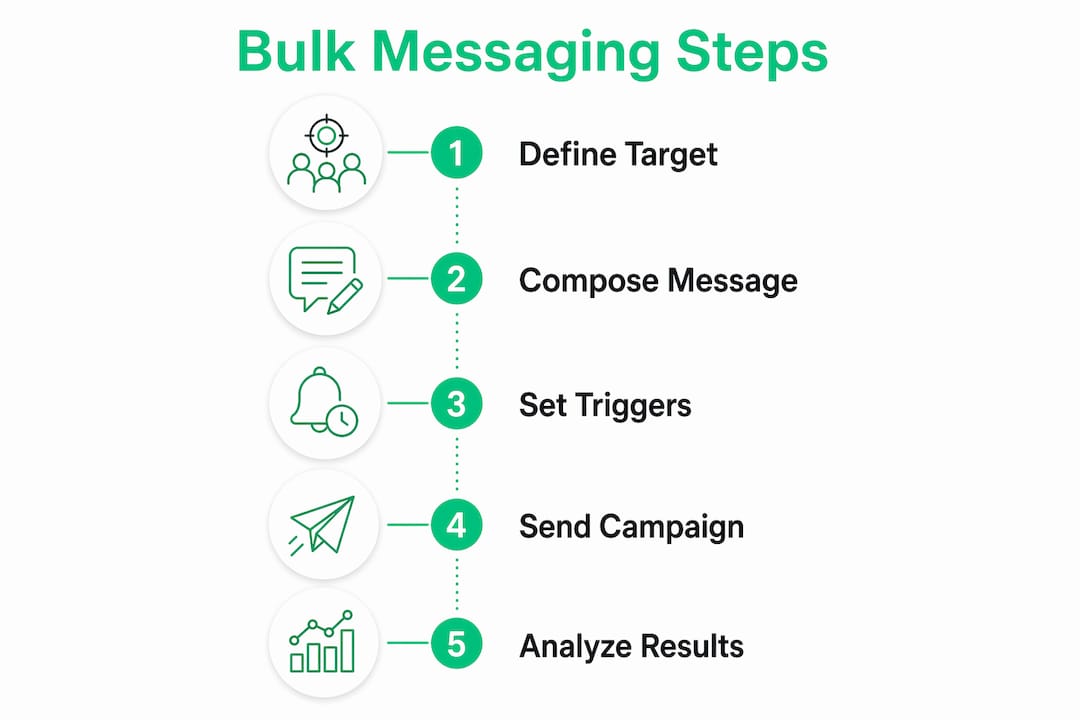
Automation is where bulk text messaging shifts from a volume play to a precision tool. Platforms like DialPhone support automated triggers tied to specific customer actions, such as cart abandonment, appointment reminders, or post-purchase follow-ups. Sending the right message at the right moment based on behavior consistently outperforms scheduled blasts to cold lists.
Pro Tip: Set up a cart abandonment trigger that fires 30 minutes after a customer leaves your site without purchasing. A single well-timed text recovers more revenue than a weekly promotional blast.
Campaign tracking and segmentation
Effective business SMS solutions include analytics dashboards that show delivery rates, click-through rates, and opt-out rates by segment. Proactive segmentation and workflow automation reduce manual effort and improve campaign performance at the same time. Without segmentation, you are sending the same message to a first-time visitor and a loyal customer of three years, which is a fast path to high unsubscribe rates.
CRM and tool integrations
Top bulk messaging tools for businesses connect directly to CRM platforms, payment processors, and automation tools. Whatsable integrates with Zapier, Make, n8n, and Pipedrive, which means your messaging triggers can fire from virtually any event in your existing tech stack. AI-assisted reply drafting inside shared inboxes can cut response times by up to 60%, which is a measurable gain for any customer service team.
What do bulk messaging platforms actually cost?
Pricing for SMS marketing services follows two main structures: per-user monthly subscriptions and pay-per-delivered-message models. Understanding both helps you avoid overpaying at low volumes or getting locked into a plan that breaks your budget at scale.
Monthly subscription plans
Entry-level plans start around $24 per user per month for platforms like DialPhone, covering core features like shared inboxes and basic campaign tools. SimpleTexting offers plans starting at $29 per month for 500 message credits, which suits small businesses with modest send volumes. These plans typically include compliance features, contact management, and basic analytics.
Pay-per-message models
High-volume senders often prefer pay-per-delivered-message pricing because it scales with actual usage rather than a fixed seat count. Volume discounts kick in at higher thresholds, so the unit cost drops significantly once you cross 10,000 or 50,000 messages per month. This model works best for e-commerce brands running seasonal campaigns or agencies managing multiple client accounts.
| Pricing Model | Best For | Typical Starting Cost | Key Limitation |
|---|---|---|---|
| Per-user monthly | Small teams, consistent volume | $24–$29/user/mo | Scales with headcount, not usage |
| Pay-per-message | High-volume or seasonal senders | Varies by volume | Costs spike during peak campaigns |
| Credit bundles | Occasional campaigns | $29/mo for 500 credits | Credits may expire |
| Enterprise custom | Large organizations | Negotiated | Requires vendor contract |
Pro Tip: If your send volume fluctuates by more than 40% month to month, a pay-per-message model will almost always cost less annually than a fixed monthly seat plan.
What are the best practices for bulk messaging campaigns?
Running a text blast for businesses without a strategy produces low engagement and high opt-out rates. The companies that get the most from mass messaging platforms follow a clear set of principles that prioritize relevance over volume.
“The best bulk messaging campaigns focus on two-way, conversational commerce rather than simple broadcasting.” — SimpleTexting
Here is a proven framework for campaigns that actually convert:
-
Segment before you send. Divide your contact list by purchase history, location, or engagement level. A loyalty customer should never receive the same message as someone who signed up yesterday. Behavioral segmentation consistently produces higher ROI than list-wide blasts.
-
Use triggers, not schedules. Scheduled blasts have their place, but automated triggers tied to real customer actions outperform them. A message sent one hour after a customer views a product page converts at a higher rate than a Tuesday morning newsletter.
-
Keep messages short and specific. SMS has a 160-character limit per segment. Get to the point in the first sentence. Include one clear call to action, not three.
-
Honor opt-outs immediately. TCPA compliance requires you to process opt-out requests without delay. Platforms that handle STOP, STOPALL, and QUIT keywords automatically protect you from legal exposure and carrier filtering.
-
Test timing and frequency. Most audiences respond best to messages sent between 10 a.m. and 7 p.m. in their local time zone. Sending more than 4–6 messages per month to the same contact without a clear value exchange accelerates opt-outs.
Bulk messaging is most effective when it operates as part of a multi-channel strategy that includes email, push notifications, and in-app messaging. Text alone is powerful. Text coordinated with other channels is significantly more powerful.
How do you stay compliant when sending bulk messages?
Compliance is the part of bulk messaging that most businesses underestimate until a carrier blocks their messages or a regulator sends a notice. In the United States, two frameworks govern business text messaging: TCPA (Telephone Consumer Protection Act) and 10DLC (10-Digit Long Code) registration.
What is 10dlc and why does it matter?
10DLC is a carrier-level registration system that requires businesses to register their brand and campaign use cases before sending messages through standard 10-digit phone numbers. Failure to register results in message filtering or outright blocking by major carriers including AT&T, Verizon, and T-Mobile. The vetting process involves brand registration, campaign categorization, and a trust score that carriers use to determine your deliverability.
The approval timeline runs up to 10 business days. That means if you plan a campaign launch, you need to start the registration process at least two weeks in advance. Many businesses miss this window and wonder why their messages are not delivering.
Common compliance pitfalls
- Sending messages to contacts who have not given explicit written consent
- Failing to include your business name in the message body
- Not providing a clear opt-out instruction (e.g., “Reply STOP to unsubscribe”)
- Using shared short codes without proper campaign registration
- Ignoring consent audit trails, which are required for legal defense if a complaint is filed
Consent timestamps and keyword handling for STOP, STOPALL, and QUIT are features that compliant platforms build in automatically. If your current bulk messaging software does not log consent with a timestamp, you are carrying legal risk you may not know about.
Tools that help with compliance
Platforms like DialPhone and Whatsable include built-in compliance monitoring, opt-out management, and 10DLC registration support. Whatsable’s anti-block measures are specifically designed to protect deliverability at scale, which is a critical feature for businesses sending thousands of WhatsApp messages per day. For B2B companies exploring pipeline automation alongside messaging, compliance infrastructure becomes even more important as message volumes grow.
Key takeaways
Bulk messaging delivers results only when compliance, segmentation, and automation work together as a system rather than as separate tactics.
| Point | Details |
|---|---|
| Open rates are unmatched | SMS open rates reach 98%, making text the highest-performing outbound channel for businesses. |
| Compliance is non-negotiable | 10DLC registration and TCPA opt-out handling must be in place before any campaign goes live. |
| Triggers beat blasts | Behavioral triggers consistently outperform scheduled list broadcasts in engagement and conversion. |
| Pricing varies by model | Monthly plans start around $24–$29; pay-per-message models suit high-volume or seasonal senders better. |
| Two-way beats one-way | Shared inboxes and conversational tools turn bulk messaging into a revenue-generating dialogue. |
Why volume without strategy is just noise
I have watched businesses spend thousands of dollars on SMS marketing services and walk away convinced that texting does not work. In almost every case, the problem was not the channel. It was the approach.
The companies that get bulk messaging right treat it like a conversation they are joining, not an announcement they are making. They know which customers bought last week, which ones have not opened an email in 90 days, and which ones are one well-timed message away from a repeat purchase. They use that data to send fewer messages, not more.
The compliance piece is where I see the most avoidable damage. Skipping 10DLC registration to save a few days feels harmless until your entire sending domain gets flagged and your deliverability drops to near zero. That is not a recoverable situation quickly. Start compliant, stay compliant.
My honest advice: start with a small, well-segmented list and one automated trigger. Measure the response rate. Then scale what works. Businesses that try to send at full volume on day one almost always burn their list before they figure out what their audience actually responds to. The chatbot and automation layer matters too. Once your messaging is working, automation is what turns a good campaign into a system that runs without you.
— Axel
How Whatsable handles bulk messaging at scale
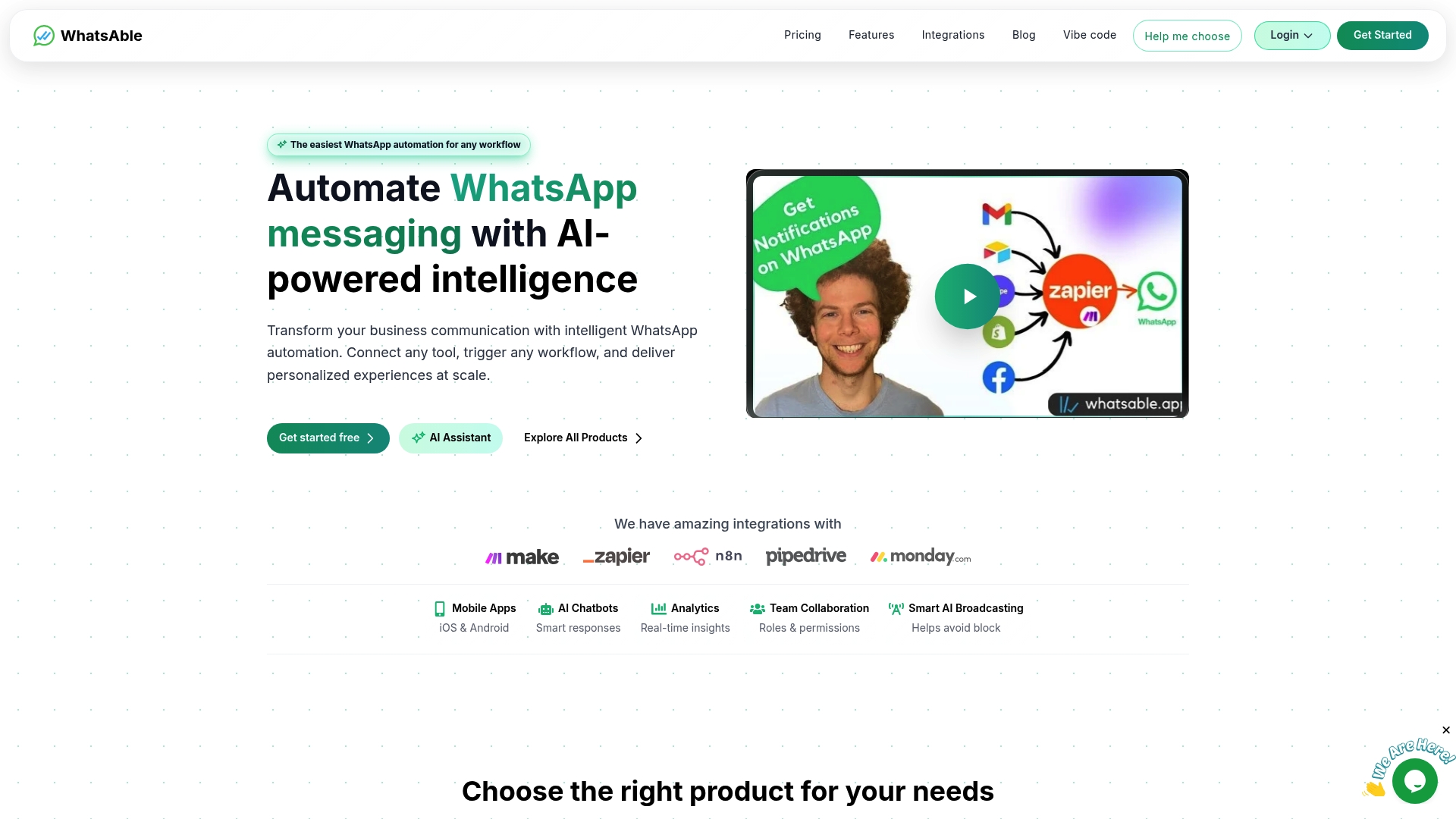
Whatsable is built for businesses that need to send high volumes of WhatsApp messages without sacrificing deliverability or compliance. Whatsable lets you send unlimited branded messages, automate follow-up sequences, and connect to tools like Zapier, Make, n8n, and Pipedrive without writing a single line of code. Anti-block measures protect your sending reputation at scale. AI-powered chatbots handle inbound replies so your team focuses on conversations that need a human touch. Whether you are a marketing agency managing multiple clients or a sales team running daily outreach, Whatsable’s platform gives you the infrastructure to send smarter, not just more. Explore the platform and see how it fits your workflow.
FAQ
What is bulk messaging for businesses?
Bulk messaging for businesses is the process of sending large volumes of text messages via SMS, MMS, or WhatsApp to customers or prospects at the same time. It is used for marketing campaigns, transactional alerts, appointment reminders, and internal team notifications.
How much does bulk messaging software cost?
Pricing typically starts around $24–$29 per month for entry-level plans, with pay-per-message models available for high-volume senders. Costs scale based on message volume, number of users, and included features like analytics and compliance tools.
What is 10dlc registration and do i need it?
10DLC is a US carrier requirement for businesses sending messages through 10-digit phone numbers. Skipping registration causes carrier filtering or message blocking, so any business sending SMS campaigns in the United States must complete it before going live.
What open rate can businesses expect from bulk text messaging?
SMS open rates reach 98%, which is significantly higher than email. That figure reflects the fact that most people read a text within minutes of receiving it, making timing and relevance critical to campaign success.
How do i avoid spam filters when sending bulk messages?
Register your brand and campaigns through 10DLC, include your business name in every message, provide a clear opt-out option, and send only to contacts who have given explicit consent. Platforms with built-in compliance monitoring handle most of these requirements automatically.

 Mira Okonkwo