 Whatsable







TL;DR:
- Most businesses mistakenly view WhatsApp as a personal messaging app, which limits their revenue potential.
- Properly leveraging WhatsApp’s features and API support can significantly boost customer engagement and conversions.
Most businesses still think of WhatsApp as a personal messaging app. That assumption is costing them real revenue. The role of WhatsApp in B2C communication has shifted dramatically over the past few years, and the data backs this up: WhatsApp now reaches more than two billion users globally, operating in markets where email barely gets opened and SMS feels impersonal. Businesses that figure out how to use it well are seeing engagement numbers that most marketing teams have never hit with traditional channels. This article breaks down what WhatsApp actually offers businesses, why it outperforms, and how to use it without the common pitfalls.
Table of Contents
- Key Takeaways
- The role of WhatsApp in B2C communication today
- Why WhatsApp outperforms other channels
- Practical strategies for integrating WhatsApp
- WhatsApp vs. other messaging channels
- The future of WhatsApp in B2C
- My take on where businesses get this wrong
- How Whatsable helps you get WhatsApp right
- FAQ
Key Takeaways
| Point | Details |
|---|---|
| WhatsApp outperforms email | WhatsApp delivers a 20% click rate on marketing messages compared to 2-5% for email. |
| API unlocks scale | The WhatsApp Business API supports automation, chatbots, multi-agent access, and CRM integration for larger operations. |
| Personalization drives results | Businesses using targeted cart recovery messages see a 40-60% improvement in recovery rates. |
| Automation needs a human backstop | Chatbot-to-agent handoffs must preserve conversation context or customers will disengage. |
| Future-proofing requires omnichannel thinking | Top brands unify WhatsApp with other channels to deliver context-aware customer experiences. |
The role of WhatsApp in B2C communication today
WhatsApp is not one product. For businesses, it comes in two distinct forms, and choosing the wrong one limits what you can accomplish.
The WhatsApp Business App suits small businesses. It is free, installs on a single device, and includes features like a business profile, a product catalog, quick replies, and basic automated greeting messages. A local retail shop or a solo service provider can use it effectively without any technical setup. The ceiling, though, is low. One device, one user, no API access, and very limited analytics.
The WhatsApp Business API is built for scale. It enables automated workflows, chatbot integration, multi-agent access, and advanced segmentation so a single account can handle thousands of simultaneous conversations. This is where businesses start building real B2C messaging strategies instead of just responding to individual chats.
Core features worth knowing
- Product catalogs: Customers browse items directly inside the chat without opening a browser
- Automated replies: Instant responses to FAQs, order confirmations, and appointment reminders
- AI-powered chatbots: Handle initial queries, qualify leads, and escalate to human agents
- Multimedia support: Send images, videos, PDFs, voice notes, and location pins natively
- End-to-end encryption: All messages are encrypted by default, which matters for customer trust
Pro Tip: If your team handles more than 50 customer conversations per day, the Business App is already a bottleneck. The API is the threshold you need to cross to scale properly.
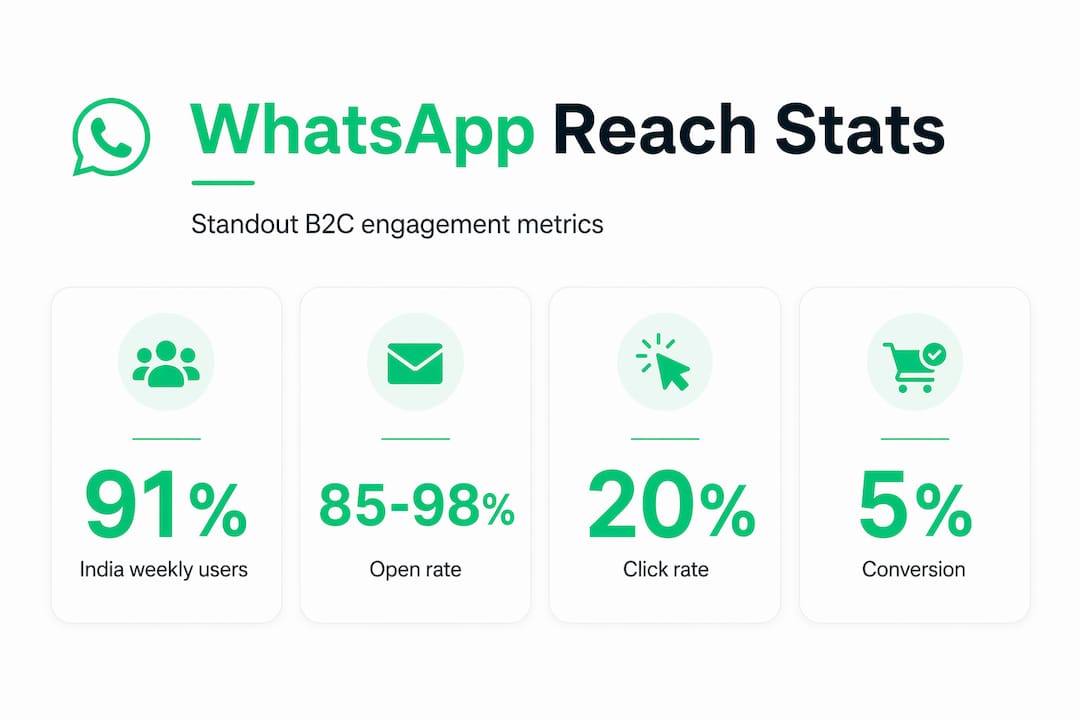
On reach, 91% of online adults in India engage weekly with businesses through chat platforms like WhatsApp. That figure represents one of the largest digital commerce opportunities on the planet, and it is not unique to India.
Why WhatsApp outperforms other channels
The numbers are not subtle. WhatsApp achieves a 20% click rate on marketing messages, with a 5% conversion rate. Email typically delivers a 2-5% click rate and 1-2% conversion. That is not a marginal advantage. That is a different category of performance.
| Metric | SMS | ||
|---|---|---|---|
| Average open rate | 85-98% | 20-25% | 35-45% |
| Click rate | 20% | 2-5% | 5-10% |
| Conversion rate | 5% | 1-2% | 2-3% |
| Response time | Minutes | Hours/days | Minutes |
The reason WhatsApp performs this way comes down to context. People open WhatsApp dozens of times a day. A message from a brand lands in the same interface where they talk to friends and family. That familiarity creates lower psychological resistance than opening an email from a marketing list.
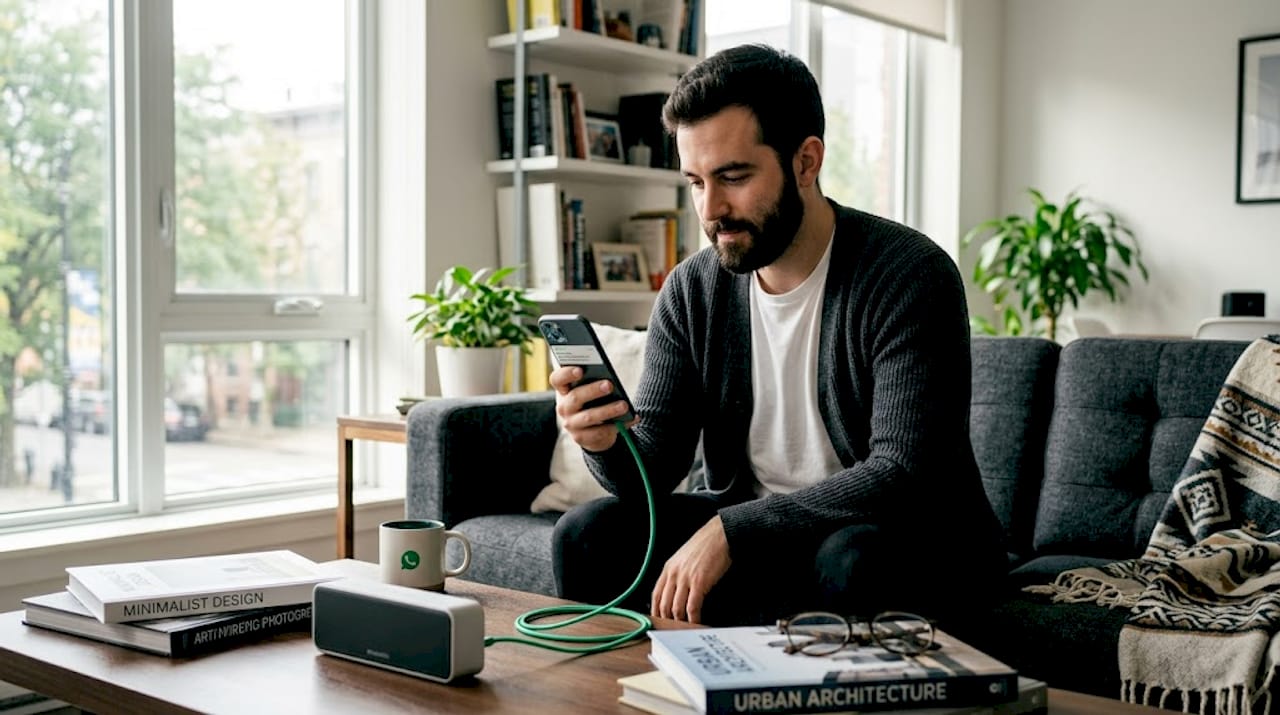
One of the clearest demonstrations of the impact of WhatsApp on marketing is cart recovery. Businesses using targeted WhatsApp reminders after abandoned carts see a 40-60% improvement in recovery rates. Compare that to abandoned cart emails, which average about 5-10% recovery, and you start to understand why 46% of marketers are increasing their WhatsApp investment in 2026.
Customer engagement via WhatsApp also benefits from the format itself. Conversational threads feel personal. When a business sends a personalized offer based on browsing history and a customer replies with a question that gets answered within minutes, that is not just a transaction. That is the beginning of brand loyalty. WhatsApp also supports full in-app commerce: browsing catalogs, asking questions via AI chat, and completing payments all without leaving the app.
Pro Tip: Do not launch WhatsApp marketing with a broad blast to your full contact list. Start with a specific segment, like recent purchasers or high-value customers, and measure response before scaling. The data from a small, engaged group will tell you more than any industry benchmark.
Practical strategies for integrating WhatsApp
Knowing WhatsApp is powerful is not enough. How you integrate it into your existing B2C communication approach determines whether you see results or create a mess.
Build a proper messaging lifecycle
Think in terms of stages rather than individual messages. A well-designed WhatsApp communication flow looks like this:
- Opt-in acquisition: Capture consent on your website, at checkout, or through a click-to-WhatsApp ad. No opt-in, no message. This is not optional under most data protection frameworks.
- Welcome sequence: Introduce your brand, set expectations on what messages the customer will receive, and deliver an immediate value offer to reward the opt-in.
- Transactional messaging: Order confirmations, shipping updates, appointment reminders. These messages have the highest open rates because customers actively want them.
- Promotional messaging: Personalized offers, product drops, or loyalty rewards. Keep these infrequent and directly relevant to each customer segment.
- Re-engagement: Customers who have gone quiet get a single, well-timed message designed to restart the conversation without feeling like a last-ditch pitch.
Balance automation with human support
Chatbots handle volume. Humans handle nuance. The businesses that get WhatsApp right treat this not as an either/or decision but as a tiered system.
High-performing WhatsApp integrations preserve full conversation context when handing off from a chatbot to a human agent. That means the agent sees everything the customer already explained. No repetition, no frustration. This sounds obvious, but most businesses set up chatbots without ever designing the handoff experience.
Avoid the trap that treating WhatsApp like email creates: bulk blasting without personalization causes broadcast fatigue, which leads customers to block your number. A blocked number on WhatsApp is permanent damage to that customer relationship.
The practical solution involves data-driven segmentation. Connect WhatsApp to your CRM so that every message is informed by purchase history, browsing behavior, and previous support interactions. The automated text reply tools that work best are the ones that know enough about the customer to sound like they were written specifically for them.
Pro Tip: Set a hard cap on promotional messages per customer per week. One or two well-targeted messages outperform five generic ones every time, and you protect your opt-in list from shrinking.
WhatsApp vs. other messaging channels
WhatsApp is not the right tool for every business need. Understanding where it excels and where it struggles helps you deploy it properly rather than ask it to do everything.
Where WhatsApp leads
- Unmatched reach in markets across Asia, Latin America, Europe, and Africa
- User familiarity means near-zero onboarding friction for customers
- Native multimedia support covers most customer communication formats
- Conversational format creates engagement that one-way channels cannot replicate
Where WhatsApp has real limitations
Compliance and data residency remain genuine concerns for regulated industries like healthcare or financial services. WhatsApp’s infrastructure runs through Meta, which creates complexity for businesses that need strict audit controls or data localization. Team collaboration inside WhatsApp is also limited compared to dedicated enterprise messaging platforms.
| Feature | WhatsApp Business App | WhatsApp Business API | Alternative channels |
|---|---|---|---|
| Scale | Single user | Thousands of agents | Varies |
| Cost | Free | Usage-based | Varies |
| Automation | Basic | Advanced | Advanced |
| Compliance controls | Minimal | Limited | Strong (some) |
| Customer familiarity | Very high | Very high | Lower |
The smart approach is complementary deployment. Use WhatsApp for customer-facing communication where engagement is the goal. Use dedicated internal tools for team collaboration. Integrate both into a CRM system that gives your team a single view of the customer.
The future of WhatsApp in B2C
The trajectory is clear. WhatsApp is moving deeper into commerce, not just communication. The shift toward AI-driven lifecycle orchestration means businesses will be able to dynamically adapt both the message content and the timing based on each customer’s real-time journey stage.
In-chat payments are already live in several markets. As that rolls out globally, the gap between “browsing a catalog on WhatsApp” and “completing a purchase” shrinks to a single message thread. This is conversational commerce as a full customer journey, not just a marketing channel.
“The businesses that will win on WhatsApp in the next three years are not the ones sending more messages. They are the ones building persistent, context-aware conversations that feel less like marketing and more like a knowledgeable assistant who already knows what the customer needs.”
The growing expectation for omnichannel continuity also matters here. Top brands already unify customer data across WhatsApp, Instagram, and other channels to maintain context regardless of where the conversation starts. Customers do not think in channels. They think in relationships with brands. WhatsApp, integrated properly, is the channel that most closely mirrors how people already communicate.
Pair WhatsApp with tools like customer service automation for retail and you have a system that handles scale without sacrificing the personal feel that makes WhatsApp effective in the first place.
My take on where businesses get this wrong
I have seen enough WhatsApp rollouts, both good and disastrous, to know that the biggest mistake businesses make has nothing to do with the technology. It is treating WhatsApp like email with a higher open rate.
Email was built for broadcast. WhatsApp was built for conversation. When you run a broadcast strategy on a conversational platform, customers feel it immediately. They did not opt in to receive a newsletter in their chat app. They opted in because they expected a relationship. When you deliver a newsletter, they block you and they do not come back.
What I have learned from watching this play out repeatedly is that the businesses getting real results are the ones that design their WhatsApp presence around the customer’s questions, not the brand’s announcements. They use automation to handle the volume but train their systems to recognize when a conversation needs a person. They track not just open rates but reply rates, because a reply means the customer is engaged. That is a fundamentally different way of measuring success.
The other thing I would push back on: do not wait until you have a perfect CRM integration and a fully mapped customer journey before you start. Start with one use case, transactional messages after a purchase, for example, and get good at it before you layer in complexity. The businesses that overthink the setup are the ones still in planning mode while their competitors are building customer relationships at scale.
— Axel
How Whatsable helps you get WhatsApp right
If you are ready to move beyond basic messaging and build a real WhatsApp communication system for your business, Whatsable was designed for exactly this.
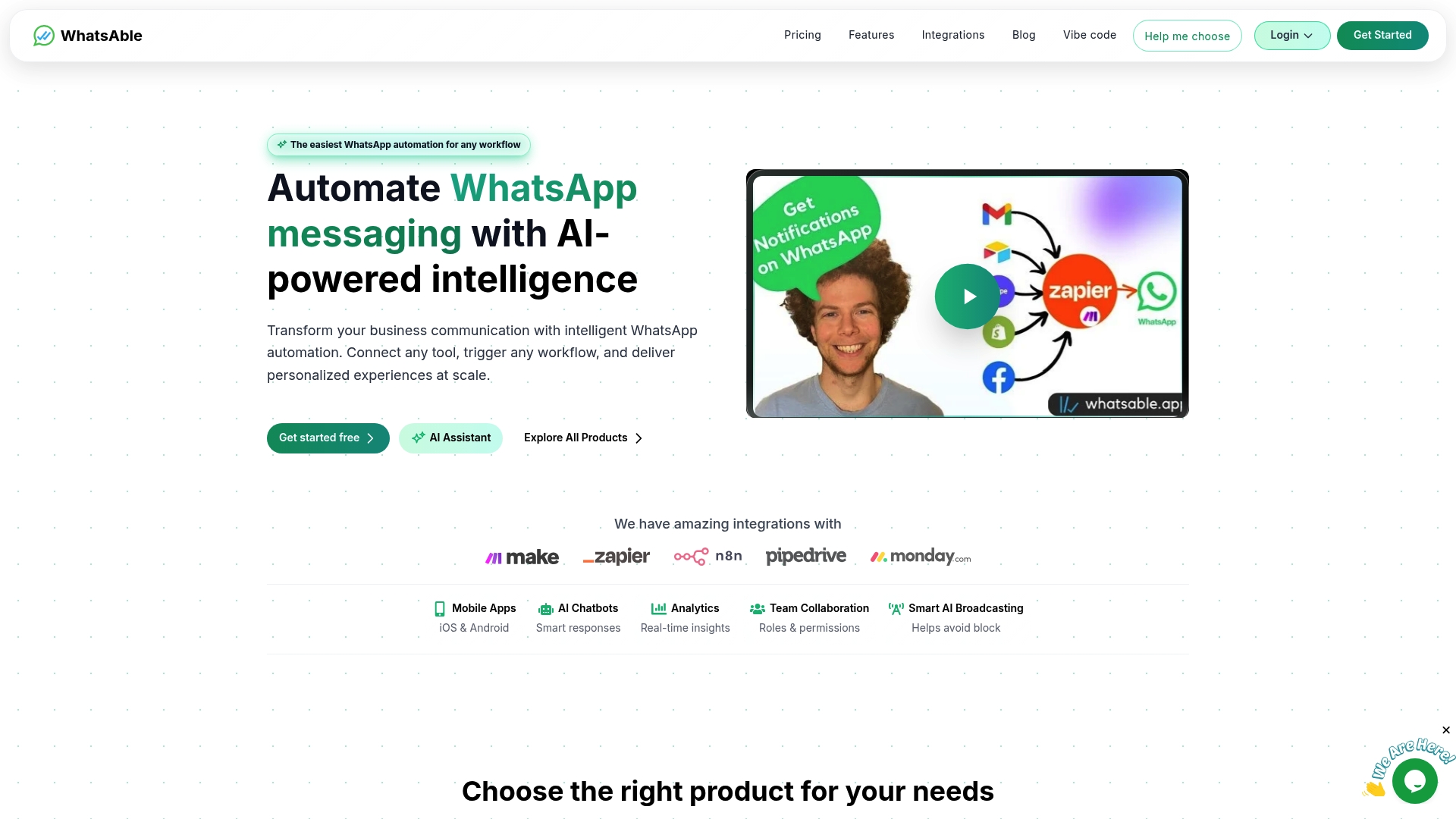
Whatsable lets businesses send unlimited branded WhatsApp messages, automate follow-up sequences, and connect directly with tools like Zapier, Make, n8n, and Pipedrive. There is no need to stitch together multiple platforms or hire a developer for every workflow change. The AI-powered chatbots handle incoming queries at scale, while multi-agent management keeps your team coordinated. For agencies and enterprises that want to deliver this under their own brand, Whatsable’s white-label solution provides the infrastructure without the overhead. Start building smarter B2C communication at Whatsable.app.
FAQ
What is the role of WhatsApp in B2C communication?
WhatsApp serves as a direct, conversational channel between businesses and customers, enabling real-time support, personalized marketing, transactional updates, and in-app commerce. It outperforms email and SMS on engagement metrics because customers are already active on the platform daily.
How does WhatsApp Business API differ from the Business App?
The WhatsApp Business App is a free, single-device tool suited for small businesses. The API supports multi-agent access, automation, chatbot integration, and CRM connectivity, making it the right choice for businesses handling high volumes of customer conversations.
What open rates does WhatsApp achieve compared to email?
WhatsApp messages reach 85-98% open rates, while email averages 20-25%. WhatsApp also delivers a 20% click rate on marketing messages versus 2-5% for email, making it significantly more effective for customer engagement.
How do businesses avoid getting blocked on WhatsApp?
Businesses should collect explicit opt-ins before messaging, limit promotional messages to one or two per week per customer, and personalize content based on customer data. Bulk blasting without personalization leads to broadcast fatigue and blocks.
Can WhatsApp replace a full customer support platform?
WhatsApp handles a large portion of customer communication well, but it works best as part of a broader system. For teams that need advanced compliance controls, audit trails, or complex internal routing, integrating WhatsApp with a CRM or support platform produces better results than relying on WhatsApp alone.
 Mira Okonkwo
 Jonah Reed