 Whatsable







TL;DR:
- WhatsApp’s high engagement rate makes it a powerful tool for closing sales, especially when linked to a CRM and automated with AI. Integrating WhatsApp with CRM systems improves follow-up, provides pipeline visibility, and accelerates deal closure. A structured messaging cadence and AI-driven insights further enhance efficiency and conversion rates in sales communications.
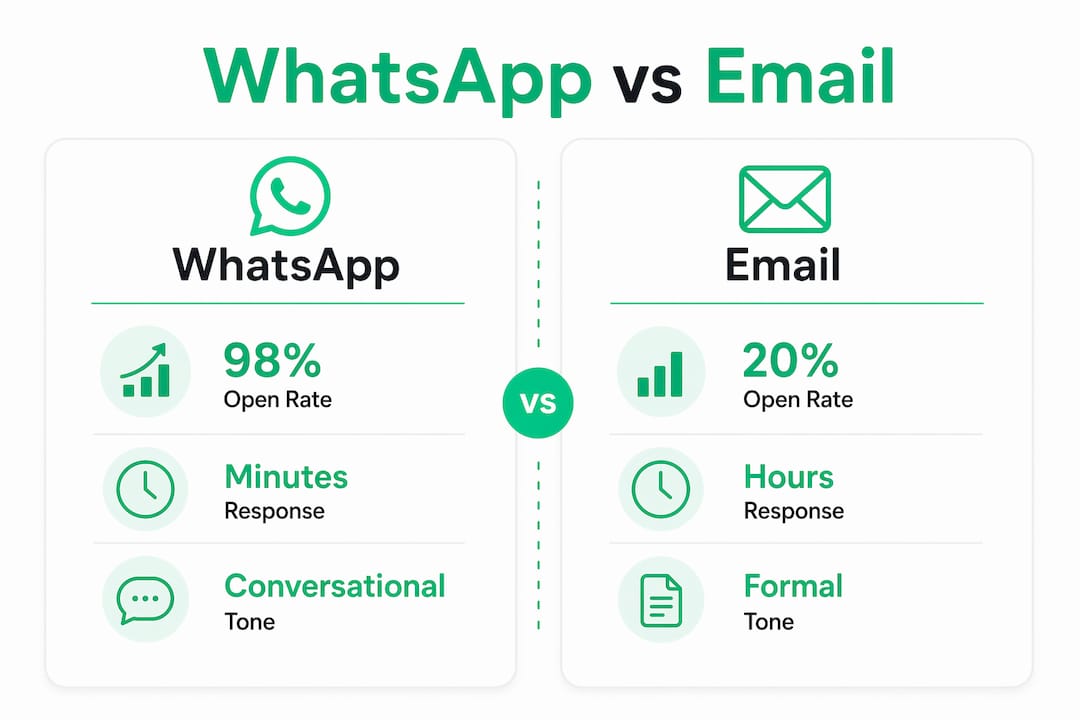
WhatsApp is the highest-engagement channel in modern sales communication, with a 98% open rate compared to email’s 20%. That gap is not a minor advantage. It means your closing messages are read almost every time, while email follow-ups disappear into inboxes. The role of WhatsApp in closing process communication goes beyond convenience. When connected to a CRM and supported by AI automation, WhatsApp transforms fragmented deal conversations into a structured, trackable sales channel that consistently accelerates closure. Sales teams using this approach report a 28–32% increase in closure rates, with response times dropping from hours to minutes.
How does WhatsApp CRM integration improve the closing process?
CRM integration is the single factor that separates WhatsApp as a serious closing tool from WhatsApp as a casual chat app. Without it, every conversation lives in a rep’s personal phone, invisible to managers and disconnected from deal data. Lack of integration creates hidden communication silos that cause lost opportunities and make attribution nearly impossible.
When WhatsApp connects to a CRM like Pipedrive, HubSpot, or Zoho CRM, the entire conversation history attaches to the deal record. Reps see buyer history, past objections, and deal stage before they send a single message. That context eliminates the awkward “just following up” messages that prospects ignore.
The operational benefits are concrete:
- Automated follow-ups: Triggers fire based on WhatsApp activity. A prospect who reads your proposal but does not respond gets a follow-up task created automatically.
- Pipeline visibility: Managers see which deals have active WhatsApp conversations and which have gone cold, without asking reps for updates.
- Conversion reporting: Automated alerts on unresponsive leads and message-to-deal conversion reports give managers real data on what is working.
- Reduced manual work: Reps spend less time logging notes and more time closing.
| Without CRM integration | With CRM integration |
|---|---|
| Conversations siloed on personal phones | Full chat history synced to deal records |
| Manual follow-up logging | Automated task creation from WhatsApp triggers |
| No manager visibility | Real-time pipeline alerts and conversion reports |
| Inconsistent follow-up timing | Structured cadence enforced by automation |
Pro Tip: If your team uses Pipedrive, connect it to a WhatsApp automation platform like Whatsable. You get automated follow-up sequences and full conversation context inside every deal card, without switching between apps.
Sales teams that treat WhatsApp as a connected channel with CRM syncing and AI support close deals more predictably and handle significantly more sales volume without adding headcount. That scalability is the real business case for integration.
Why does WhatsApp outperform email for deal closing?
The communication style of WhatsApp is structurally better suited to closing deals than email. WhatsApp’s conversational nature encourages brevity and immediacy, reducing friction compared to long-form emails. A prospect can answer a pricing question in 10 seconds on WhatsApp. The same exchange over email takes hours and often gets buried under 50 other messages.

The informal tone also matters strategically. Busy decision-makers respond to messages that match their natural communication rhythm. A short WhatsApp message feels like a conversation. A formal email feels like homework.
| Channel | Typical response time | Tone | Best use case |
|---|---|---|---|
| Minutes | Conversational, direct | Quick negotiations, real-time decisions, reminders | |
| Hours to days | Formal, structured | Contracts, legal documents, detailed proposals |
Voice notes and rich media sharing on WhatsApp add a personal dimension that email cannot replicate. A 30-second voice note explaining a contract clause builds more trust than a three-paragraph email. Sharing a product demo video or a signed PDF directly in the chat keeps the deal moving without requiring the prospect to open a separate platform.
Email still has a place in the closing process. Contracts, formal proposals, and compliance documents belong in email because they require a paper trail and professional formatting. WhatsApp handles everything else: the check-ins, the objection handling, the quick clarifications, and the final push to sign.
Pro Tip: Use WhatsApp for real-time negotiation and email for formal documentation. Send a WhatsApp message to alert the prospect that the contract is in their inbox. That combination increases the chance the email gets opened immediately.
The informal tone of WhatsApp reduces communication friction and fits the decision-making rhythm of busy professionals far better than formal email chains. That fit is not accidental. It is why effective communication via WhatsApp has become a standard practice in high-performing sales teams.
What is the right message cadence for WhatsApp closing communication?
Message cadence is where most sales teams either win or lose the deal on WhatsApp. Over-messaging pushes prospects to block you. Under-messaging lets deals go cold. A recommended WhatsApp messaging cadence that reduces the chance of being blocked follows this structure:
- Day 1: Respond immediately to any inquiry or trigger event. Speed signals professionalism and keeps the prospect engaged while interest is highest.
- Day 2: Send a document follow-up. This could be a proposal, a case study, or a product comparison. Give them something concrete to review.
- Day 5: Send a soft check-in. Ask a single, low-pressure question. “Did you get a chance to look at the proposal?” works better than a generic “just checking in.”
- Day 10: Send a value-add message. Share a relevant article, a client success story, or a new piece of information that addresses a known objection.
- Day 21: Send a final outreach. Keep it brief and respectful. If there is no response after this, move the lead to a low-frequency broadcast list.
A strict, value-based messaging cadence prevents prospects from feeling spammed and increases the chance of eventual engagement. The key principle is that every message must deliver something useful. A message that only asks “are you still interested?” provides no value and trains the prospect to ignore you.
Segment your leads into frequency tiers based on engagement. Prospects who open messages and click links get more frequent contact. Prospects who have not responded in two weeks move to a lower-frequency sequence. This segmentation keeps your most engaged leads warm without burning out cold ones.
Pro Tip: Use WhatsApp Business API templates for your Day 2 and Day 10 messages. Pre-approved templates send reliably, avoid spam filters, and let you personalize with the prospect’s name and deal-specific details automatically.
How do AI and automation speed up deal closing on WhatsApp?
AI and automation within WhatsApp are changing how sales reps manage the closing stage. The most immediate benefit is context. AI-driven tools summarize past WhatsApp interactions for sales reps, provide suggested next steps, and automatically create follow-up tasks. A rep who picks up a deal mid-conversation no longer needs to scroll through 200 messages to understand where things stand.
The practical impact on closing speed is significant:
- Chat summaries: AI reads the full conversation and delivers a three-sentence brief. The rep knows the prospect’s main objection, the last offer made, and the agreed next step.
- Suggested responses: AI recommends replies based on the prospect’s last message and the deal stage. Reps approve or edit rather than composing from scratch.
- Automatic task creation: When a prospect says “send me the contract,” the system creates a task and assigns it to the rep without manual input.
- Chat routing: The WhatsApp Business Platform supports multi-agent shared inboxes, so the right rep or specialist receives the conversation instantly based on deal type or territory.
These features directly address the two biggest killers of deals at the closing stage: slow response times and lost context. When a rep responds in minutes with full context, the prospect experiences a level of attentiveness that builds confidence in the purchase decision.
The role of messaging apps in business is expanding as AI becomes embedded in platforms like WhatsApp. Automation handles the repetitive work, and reps focus on the conversations that actually require human judgment.
Key takeaways
WhatsApp’s role in closing process communication is most effective when CRM integration, structured cadence, and AI automation work together as a single system rather than separate tools.
| Point | Details |
|---|---|
| CRM integration is non-negotiable | Without it, WhatsApp conversations create silos that kill attribution and follow-up consistency. |
| Open rate advantage is decisive | WhatsApp’s 98% open rate versus email’s 20% means closing messages are seen almost every time. |
| Cadence prevents blocking | A five-step sequence from Day 1 to Day 21 keeps prospects engaged without triggering spam behavior. |
| AI reduces rep workload | Chat summaries and automatic task creation let reps handle more deals without losing context. |
| Email still has a role | Use WhatsApp for negotiation and check-ins; reserve email for contracts and formal documentation. |
WhatsApp as a sales system, not just a chat tool
I have watched sales teams adopt WhatsApp with genuine enthusiasm and then wonder six months later why their close rates did not improve. The pattern is almost always the same. They use WhatsApp for conversations but keep their CRM as a separate system updated manually, if at all. The result is a channel with great engagement metrics and no accountability structure underneath it.
The teams that actually move the needle treat WhatsApp as a layer of their sales infrastructure, not a replacement for it. Every conversation feeds the CRM. Every follow-up fires from an automation rule. Every manager dashboard reflects what is actually happening in the chat, not what reps remember to log.
The other mistake I see constantly is over-messaging. A rep gets excited about WhatsApp’s open rates and starts sending daily check-ins. Within two weeks, the prospect blocks the number. That one block does not just lose the deal. It permanently removes that prospect from your pipeline. A disciplined cadence is not optional. It is the difference between WhatsApp as a closing tool and WhatsApp as a liability.
The future of WhatsApp in sales is moving toward AI-generated conversation coaching, where the system flags when a rep’s message tone shifts too formal or when a response time exceeds the optimal window. Teams that build the integration and automation foundation now will be positioned to use those features without rebuilding their entire workflow.
— Axel
See how Whatsable connects WhatsApp to your sales workflow
If the CRM integration and automation strategies in this article describe what your team needs, Whatsable is built to deliver exactly that. Whatsable connects WhatsApp to tools like Pipedrive, Zapier, Make, and n8n, automating follow-up sequences and giving your team full conversation context inside every deal record.
Whatsable also supports bulk messaging with anti-block measures, AI-powered chatbots, shared team inboxes, and detailed analytics on message-to-deal conversion. Whether you are running a five-person sales team or a large enterprise operation, the platform scales to your volume. Explore white-label options if you need a branded WhatsApp communication solution for your clients or internal teams.
FAQ
What is the role of WhatsApp in closing process communication?
WhatsApp accelerates deal closing by delivering messages with a 98% open rate and enabling real-time, conversational exchanges that reduce friction compared to email. When connected to a CRM, it becomes a fully trackable sales channel with automated follow-ups and pipeline visibility.
How does WhatsApp compare to email for sales closing?
WhatsApp produces faster responses and higher engagement for negotiations and check-ins, while email remains the standard for contracts and formal documentation. The most effective approach uses both channels together, with WhatsApp driving the conversation and email handling the paperwork.
What message cadence works best on WhatsApp for closing deals?
A five-step cadence works best: immediate response on Day 1, document follow-up on Day 2, soft check-in on Day 5, value-add message on Day 10, and final outreach on Day 21. Each message must deliver something useful to avoid being blocked.
How does AI improve WhatsApp sales communication?
AI tools summarize past WhatsApp conversations, suggest next-step responses, and automatically create follow-up tasks. This gives sales reps full deal context instantly and reduces the manual workload at the closing stage.
Why does CRM integration matter for WhatsApp sales teams?
Without CRM integration, WhatsApp conversations stay siloed on individual phones with no manager visibility or automated follow-up. Integration turns WhatsApp into an attributable, managed sales channel where every interaction connects to a deal record and a measurable outcome.
 Priya Deshmukh
 Jonah Reed
 Elias Navarro