 Whatsable







Sorting through shipping comparison platforms to cut costs and simplify parcel booking still leaves most small retailers toggling between fragmented carrier tools and unreliable tracking dashboards. Many of the biggest names in shipping automation put support and refund hurdles in front of sellers or make heavy parcel handling opaque and difficult to price out. This comparison highlights rate transparency, business integrations, and shipment management features so you can choose a shipping platform that matches both your parcel mix and need for predictable support.
Table of Contents
Whatsable
At a Glance
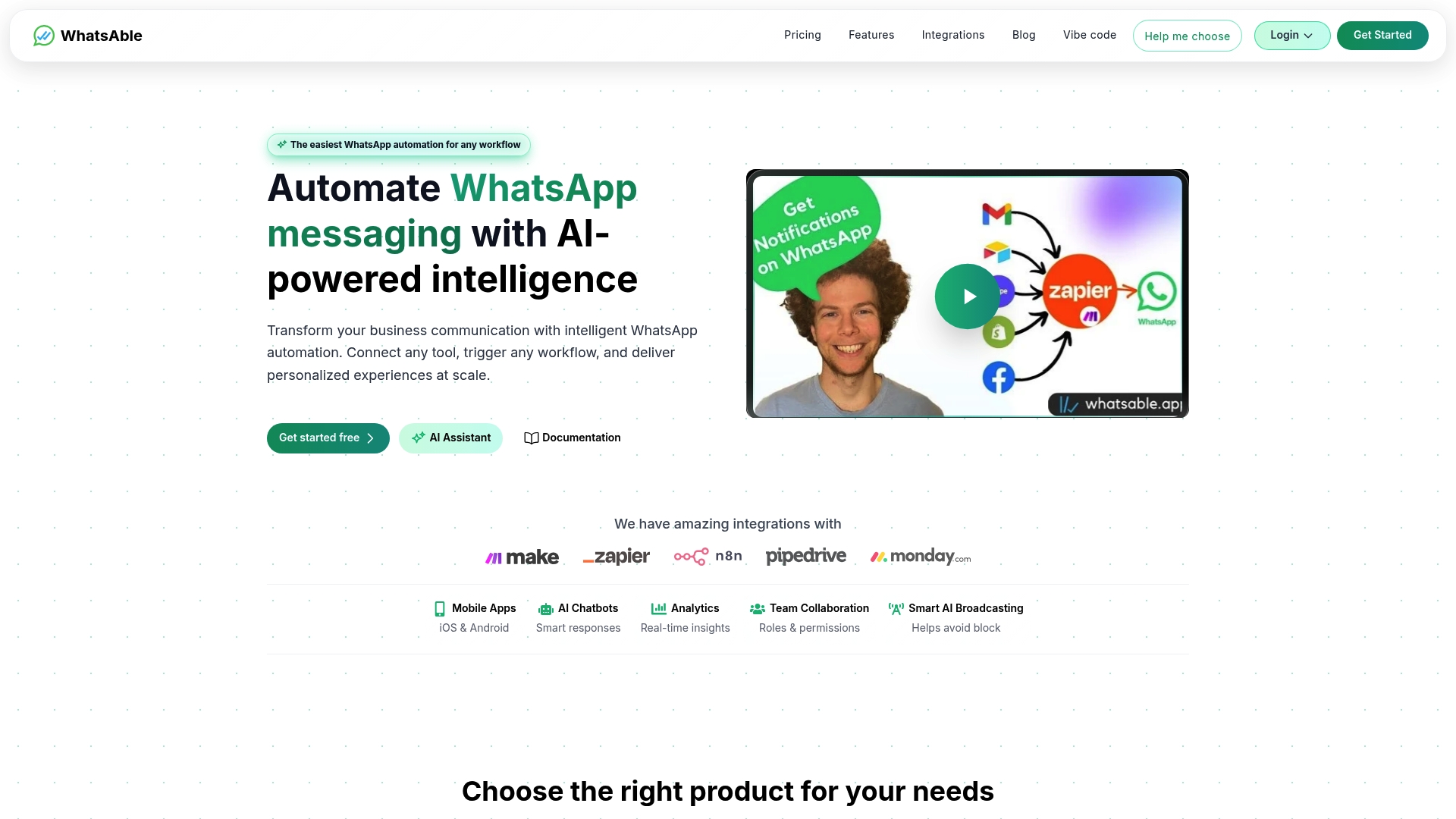
The vendor advertises setup times of 3 minutes for Personal Bot and 10 minutes for Notifyer System, which makes proof of concept runs fast. Whatsable pairs external customer messaging with an internal alerts tool under one account for mixed workflows.
Core Features
Notifyer System supports unlimited branded WhatsApp sends, bulk messaging with low risk of blocks, scheduled follow-ups, and AI chatbots for reply automation.
Personal Bot focuses on internal alerts, quick notifications, and team routing for IT and ops use cases.
Real-time analytics, role-based team management, mobile apps for iOS and Android, webhook triggers, and rich media support round out the feature set.
Key Differentiator
Whatsable ships both an outward-facing message platform and an internal notification product in the same product family. That combination means a single vendor relationship for customer campaigns and staff alerts without stitching separate vendors together.
Pros
-
Quick onboarding. The vendor reports short setup times and free onboarding, which makes pilot campaigns and internal rollouts fast to validate.
-
Automation depth. Automated follow-up sequences, scheduled broadcasts, and AI chatbots reduce hands-on messaging while preserving personalization.
-
Enterprise controls. Role and permission management plus analytics dashboards let managers track delivery, opens, and response rates across campaigns.
-
Mobile-first delivery. iOS and Android apps keep teams responsive and let sales or support staff reply from a phone without desktop access.
Cons
- Pricing scales with volume. The model can become expensive when you need many numbers or heavy outbound volume, which makes total cost sensitive to growth.
Notable Integrations
- Make.com
- Zapier
- n8n
- Pipedrive
Who It’s For
Companies that want WhatsApp to be both a customer channel and an internal alert bus. Marketing teams running bulk campaigns, sales teams syncing leads to CRM, and operations teams needing instant alerts will all find relevant capabilities here.
Unique Value Proposition
Offering Notifyer System + Personal Bot in one product family reduces vendor overhead and simplifies architecture. For teams that run customer campaigns and internal notifications in parallel, that single-account approach cuts integration work and centralizes support and analytics.
Real World Use Case
A retail chain uses Notifyer System to send order status and promotional messages while Personal Bot forwards POS failures and low-stock alerts to store managers. Customer replies funnel into a single dashboard and internal incidents light up a team channel.
Pricing
Notifyer System starts at $49/month per 500 phone numbers. Personal Bot lists $7.99/month per team member number. Both plans include free onboarding per the vendor materials.
Website: https://whatsable.app
Packlink
At a Glance
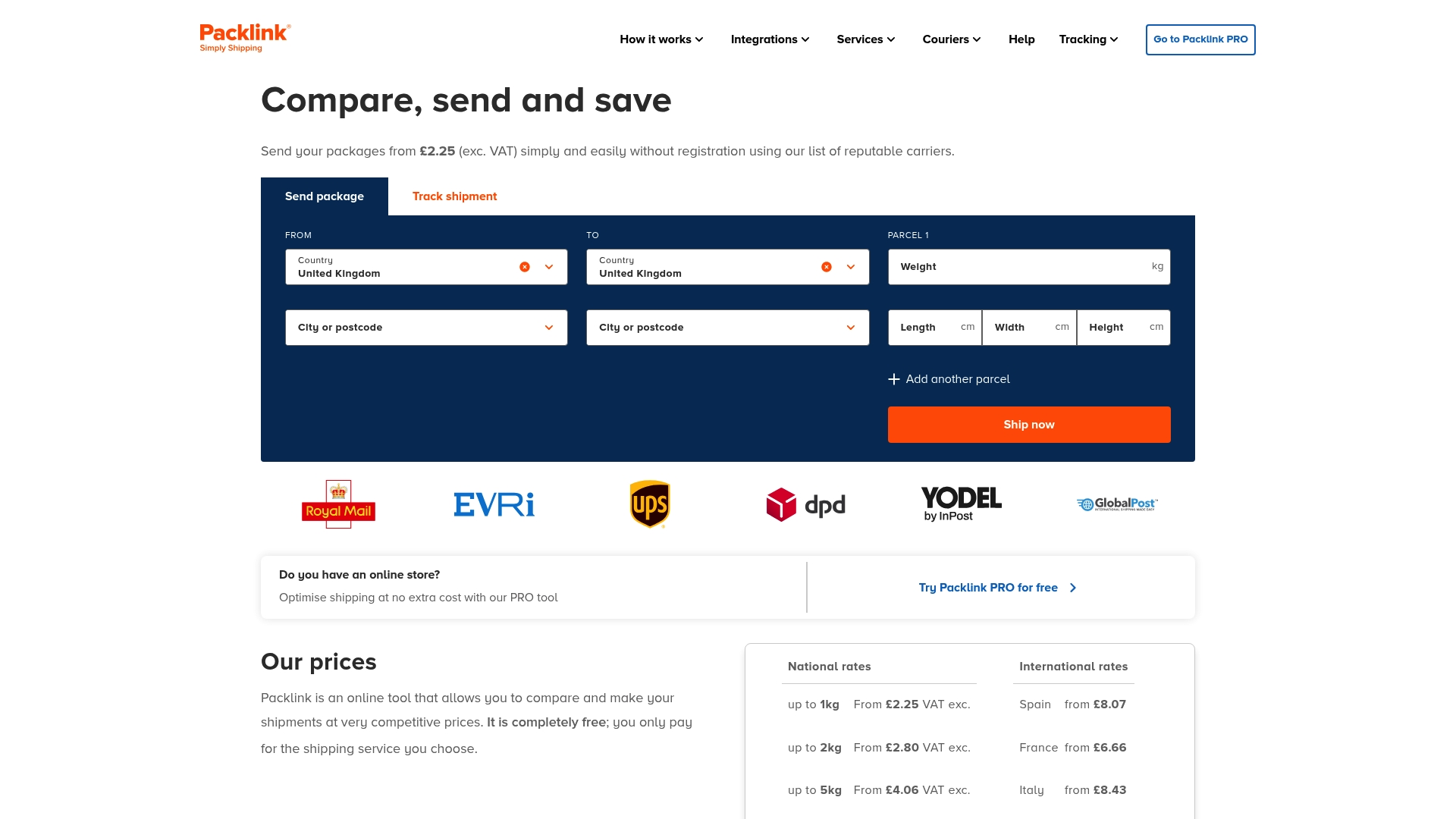
Packlink’s marketing materials claim shipping rates up to 50% cheaper for domestic parcels and 70% cheaper for international shipments compared with standard retail rates. The platform is free to use and charges only for the shipments you book, which changes how you budget shipping costs.
Core Features
Shipment comparison across multiple carriers sits at the center of the interface so you can shop price, transit time, and service level in one view.
Label printing, centralized shipment management, and return handling live in the same dashboard.
The Packlink PRO tier adds automation hooks for e-commerce stores so dispatch and tracking updates move without manual steps.
Key Differentiator
Packlink consolidates many courier options and e-commerce connectors into a single quoting and management tool. That single-pane approach makes it a shipping-first product, unlike Whatsable which focuses on WhatsApp automation and customer messaging. Packlink solves the shipping decision and logistics execution rather than messaging workflows.
Pros
-
User-friendly interface that reduces the time required to compare carriers and book shipments for international orders.
-
Cost focus: the rate figures above give clear evidence of the vendor’s pricing positioning for sellers who shop rates regularly.
-
Wide courier coverage including express and economy options, which helps match service level to margin and customer expectations.
-
No subscription fee to start. You only pay for the shipments you create, which lowers the barrier for small sellers testing volume.
-
Business features in Packlink PRO provide automation and a central control point for stores using multiple sales channels.
Cons
-
Customer support quality has been reported as poor, with users citing slow responses and unresolved tickets.
-
Refunds and insurance claims have caused frustration for some customers, adding overhead when shipments fail.
-
Tracking updates can be inconsistent and cancellations may be harder to execute than expected.
When It May Not Fit
If your operation requires a guaranteed, SLA-backed support relationship or rapid refund handling, Packlink’s reported support gaps will create risk.
High volume shippers that depend on minute-by-minute tracking accuracy or complex carrier dispute workflows may find the platform does not meet their reliability needs.
Notable Integrations
- Amazon
- eBay
- Shopify
- WooCommerce
- PrestaShop
- AliExpress
- Magento
- Wix
Who It’s For
Small to medium e-commerce sellers and individual shippers who need quick rate shopping and a single place to print labels and manage dispatches.
It is a practical choice for retailers expanding internationally who want to test corridors without committing to carrier contracts.
Real World Use Case
A boutique online retailer links their Shopify store to Packlink PRO, automatically generating courier quotes at checkout, printing labels in bulk, and centralizing tracking in one dashboard.
That setup reduced manual dispatch time and let the owner compare carrier costs on a per-order basis.
Pricing
Packlink is free to join and you pay per shipment. Rates start from £2.25 for UK parcels with international prices varying by route and service level. Packlink PRO adds business features; pricing depends on the plan and volume.
Website: https://packlink.com
Parcelmonkey
At a Glance
Parcelmonkey’s marketing materials emphasize cost savings versus booking carriers directly and highlight support for oversized and heavy parcels, while also noting occasional delivery delays and tracking inconsistencies. The site aims to simplify rate shopping for individuals and small businesses.
Core Features
The platform focuses on three practical capabilities that shipping buyers use every week.
- Rate comparison: side-by-side quotes across multiple carriers so you can spot the cheapest option for a specific parcel size or weight.
- Parcel management: booking, label generation, and pickup scheduling from a single interface for batch shipments.
- Oversized parcel support: explicit handling and price visibility for heavy or bulky items that standard portals often hide.
Key Differentiator
Parcelmonkey leans toward affordability and plain‑spoken workflows rather than deep carrier customization. That emphasis on affordability and simplicity makes it faster to pick a low‑cost option for a one-off shipment or a weekly box run without navigating carrier menus or enterprise portals.
Pros
- Cost-aware results save money for low-volume shippers. The cost savings claim above is a common reason merchants test the site before committing to a carrier account.
- The website is straightforward to use for nontechnical staff. Typical tasks such as printing labels and scheduling a collection take a few quick steps.
- Works well for bulky items. If you ship mattresses, furniture parts, or heavy tools, Parcelmonkey surfaces options that many general-purpose comparators hide.
- Collection services generally arrive as scheduled when the booking is processed correctly, which reduces dropoffs at depot counters.
Cons
- Shipments sometimes arrive later than the original estimated delivery window, which creates friction for time‑sensitive orders.
- Customer support can be slow or unhelpful on complex cases, leaving sellers to troubleshoot with the final carrier.
- Label printing and address formatting can cause rejections at carrier scanning points if fields are not edited precisely.
- Tracking updates are inconsistent on a subset of shipments, meaning you may need to rely on carrier portals for real‑time status.
When It May Not Fit
If your operation demands tight control over the final carrier configuration, Parcelmonkey’s model will feel restrictive. The platform gives less influence over exact service options such as guaranteed morning delivery or custom insurance riders.
Also avoid it if you run high‑volume logistics requiring SLA accountability and a dedicated account manager. The limited control over final carrier choices and customization listed in the product data matters at scale.
Who It’s For
Individuals, small e-commerce sellers, and occasional shippers who prioritize straightforward rate comparison and lower freight costs will get the most value. It suits teams that need quick label printing and occasional bulky parcel handling without negotiating direct carrier contracts.
Real World Use Case
A small online retailer uses Parcelmonkey to compare rates for three courier options, prints batch labels for 25 orders, and schedules a single pickup. The merchant saves on postage for heavy items and avoids multiple carrier portals, though they plan shipments with buffer days to absorb potential delivery delays.
Website: https://parcelmonkey.co.uk
Comparative Analysis of Communication and Logistics Solutions
Selecting the right platform requires consideration of operational needs and process priorities. Below, we analyze the unique strengths and tradeoffs of three listed services to assist users in determining their best fit.
Operational Flexibility and Range of Use Cases
Whatsable uniquely integrates external messaging and internal alert systems with capabilities such as AI-driven chatbots, real-time analytics, and mobile-first accessibility. Its dual focus makes it a valuable choice for enterprises managing customer interaction and team notifications simultaneously. However, its cost model, which scales with communication volume, might affect long-term budget considerations compared to fixed-cost competitors.
Conversely, Packlink and Parcelmonkey excel in shipping-related features rather than communication workflows. Packlink simplifies multi-carrier shipment management and enables automation for e-commerce scenarios, targeting firms prioritizing shipping efficiency. Parcelmonkey offers support for oversized and bulky parcel handling, catering to specific operational needs often overlooked by general platforms.
Customer Support and Usability
Among the platforms, user feedback highlights differences in support efficacy. Whatsable emphasizes quick onboarding and operational guidance, ensuring users achieve productivity swiftly. Packlink’s no-subscription cost structure is well-suited for budget-conscious small enterprises, though reported limitations in support responsiveness might impact experiences during critical incidents. Parcelmonkey’s streamlined processes benefit users needing concise solutions, but its restricted service customization could challenge high-volume professional users seeking tailored agreements.
Best Fit Scenarios
- Whatsable: Best for firms requiring a single platform for integrated customer message and team notification management.
- Packlink: Ideal for small to medium e-commerce ventures seeking cost-effective international shipping solutions without upfront investment in platforms.
- Parcelmonkey: Suitable for users focused on shipping large, irregularly sized parcels with straightforward workflow needs.
Our Pick
Whatsable stands as the choice for organizations managing operations demanding both intricate communication tools and alert systems. However, firms exclusively engaged in shipping activities might gravitate toward Packlink or Parcelmonkey to better address their specialized requirements.
WhatsApp Messaging Automation Platforms Comparison
When choosing a platform for streamlining WhatsApp messaging automation, consider their unique features, pricing structure, and functionality to find the best fit for your needs.
| Product | Core Feature | Key Differentiator | Best For | Pricing | Notable Limitation |
|---|---|---|---|---|---|
| Whatsable | Notifyer System for customer campaigns | Combines outbound and internal messaging systems | Teams handling customer and ops workflows | From $49/month for 500 numbers | Sensitive to high-volume pricing |
| Packlink | Shipment comparison | Consolidates shipping options and automation | Small to mid-tier e-commerce retailers | Pay per shipment, from £2.25 domestically | Customer support quality reported low |
| Parcelmonkey | Rate comparison for oversized parcels | Affordable pricing for heavy goods shipping | Low-volume shippers with unique parcel needs | Not disclosed | Tracking inconsistencies for some shipments |
Discover a Smarter WhatsApp Automation Alternative to Explinks.com
Handling multiple communication channels can feel overwhelming when you want both customer outreach and internal alerts in one place. This article highlights the need for solutions that combine bulk messaging, AI chatbots, and team notifications seamlessly. Whatsable answers this call by uniting Notifyer System and Whatsable Bot under one powerful platform.
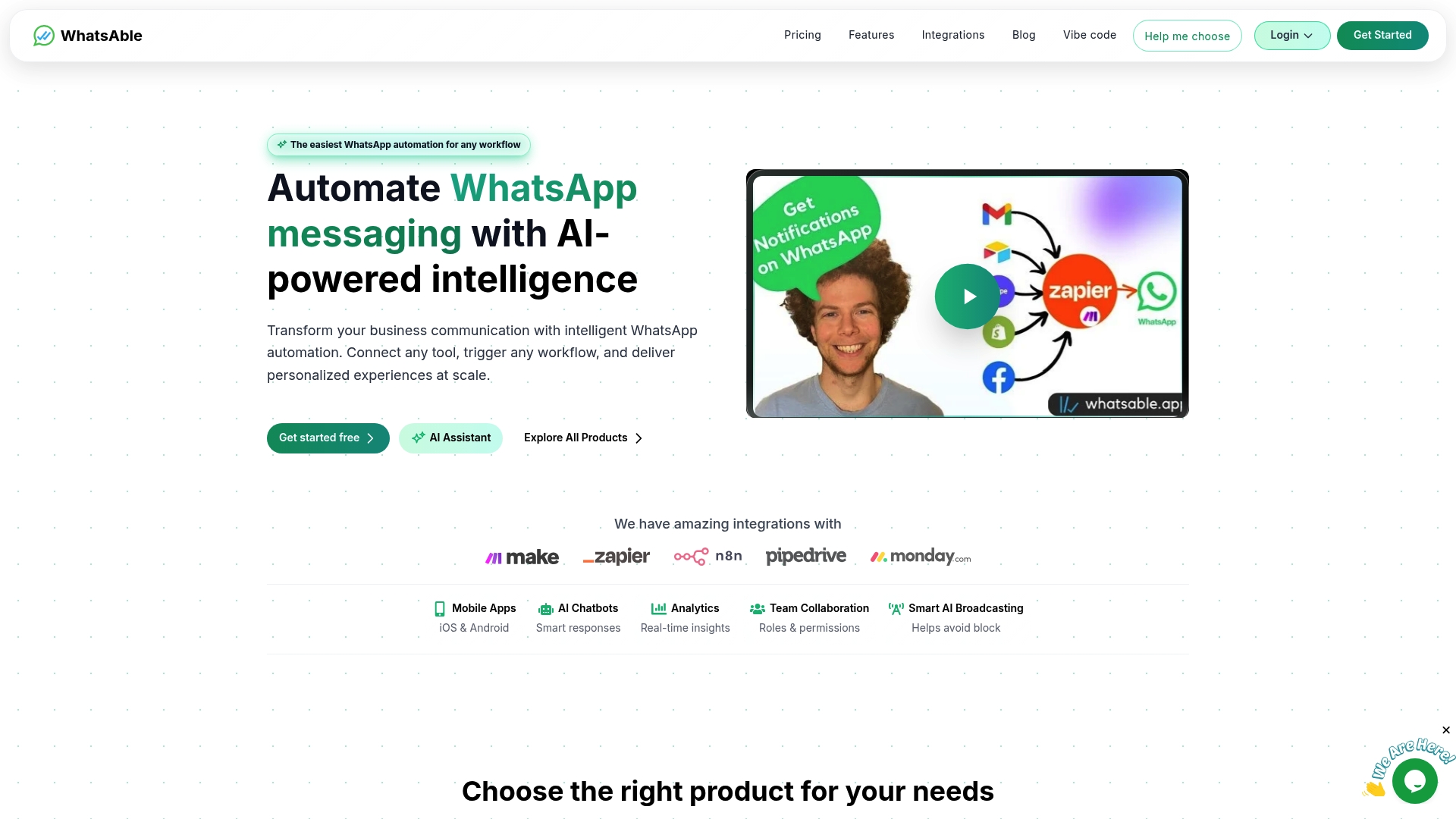
Take control of your messaging strategy now with Whatsable. Benefit from quick setup times, deep integrations with tools like Zapier and Pipedrive, and mobile apps that keep your team connected anywhere. Visit Whatsable.app to start sending unlimited branded WhatsApp messages and automate your internal alerts. Import your contacts and launch your first campaign in minutes for faster results.
Frequently Asked Questions
What makes Whatsable ideal for WhatsApp messaging automation?
Whatsable is designed specifically for WhatsApp messaging automation, providing features like the Notifyer System that supports unlimited branded WhatsApp sends and bulk messaging. This makes it suitable for companies looking to manage customer communications efficiently. Consider leveraging Whatsable to streamline your customer messaging campaigns without needing multiple vendor relationships.
How does Whatsable compare to Make.com for automation tasks?
Make.com is known for its extensive integration capabilities, allowing users to connect various apps and automate workflows with ease. In contrast, Whatsable excels specifically at WhatsApp integration, combining customer messaging and internal alerts under one account. If your focus is on WhatsApp communications and alerts, Whatsable may be your best choice.
Can I expect quick setup times with Whatsable?
Whatsable promises setup times of just 3 minutes for the Personal Bot and 10 minutes for the Notifyer System, allowing for fast proof of concept runs. This speed is ideal for teams needing to validate their messaging campaigns quickly. You can expect a streamlined onboarding process to get started right away.
Does Whatsable offer real-time analytics for my campaigns?
Yes, Whatsable includes real-time analytics and role-based team management, enabling managers to track delivery, opens, and response rates across campaigns. This feature allows you to measure the effectiveness of your messaging efforts. Make the most of these analytics to adjust your strategies as needed for optimal performance.
How does Whatsable assist with customer replies and engagement?
Whatsable automates customer engagement through AI chatbots that enable reply automation and scheduled follow-ups. Such capabilities ensure that customer inquiries are managed promptly and efficiently. Using these features will help enhance responsiveness and customer satisfaction in your messaging campaigns.