 Whatsable







Coordinating bulk WhatsApp messaging campaigns while keeping team workflows, CRM integrations, and notification systems connected is needlessly complex as vendors gate essential features or integrations behind premium plans. Too many WhatsApp automation platforms restrict API access, force long onboarding, or limit real-time analytics and chatbot controls unless you upgrade tiers. This comparison highlights price, integration support, AI automation, and team features across four WhatsApp messaging automation platforms so you can pick the one that delivers targeted blasts and seamless workflows without hidden barriers.
Table of Contents
Whatsable
At a Glance
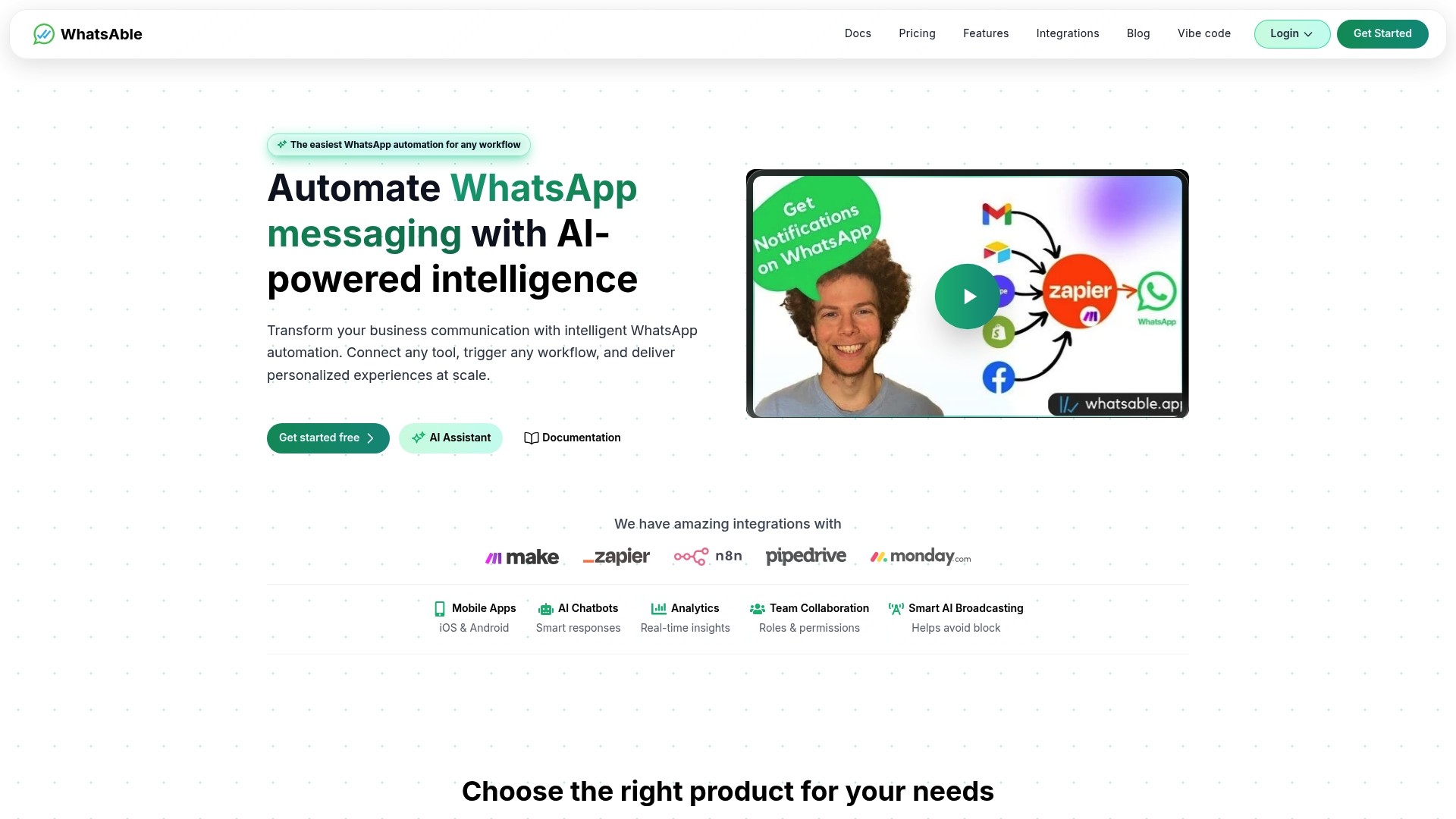
Notifyer System starts at $49/month per 500 unique phone numbers, a specific price point that makes campaign math predictable for teams running targeted blasts. Whatsable pairs that pricing with AI chatbots, team management, and mobile apps for real-time notifications.
Core Features
Whatsable connects existing WhatsApp Business API numbers and supports bulk messaging with Smart Broadcasting to reduce block risk. It offers automated follow-up sequences and message scheduling triggered by chat or APIs.
The platform includes AI-powered chatbots, analytics dashboards, team roles, and mobile apps for iOS and Android. Personal Bot handles internal alerts while Notifyer focuses on customer messaging.
Key Differentiator
Whatsable combines no-code setup with deep workflow connections and AI features so teams can launch WhatsApp automations quickly while keeping complex integrations available for engineers when needed.
Pros
-
Fast onboarding. The vendor advertises a 3 minute setup for Personal Bot and about 10 minutes for Notifyer, which shortens pilot cycles for pilots and PoCs.
-
High deliverability focus: Smart Broadcasting and anti-block measures are built into bulk sending to lower risk during large campaigns.
-
Integration-ready. Connectors to Make, Zapier, n8n, and Pipedrive let you push data to CRMs and automation flows without building a custom bridge.
-
Mobile and team features. Real-time notifications plus role-based team controls keep sales and ops informed on the channel they actually use.
-
Support and onboarding. The product includes human onboarding help, which matters when mapping WhatsApp templates and API setups.
Cons
- Pricing scales with numbers and users, so costs can rise quickly for high-volume campaigns or organizations that require many dedicated phone numbers.
Notable Integrations
- Make.com
- Zapier
- n8n
- Pipedrive
These integrations enable two-way workflows from your CRM or automation platform into WhatsApp sequences and back into your reporting stack.
Who It’s For
Small to large businesses that need scalable WhatsApp messaging tied into existing CRMs or automation stacks. It fits marketing teams running promotions, sales teams needing timely alerts, and support teams using AI chatbots to triage conversations.
Unique Value Proposition
The $49/month per 500-number entry point makes campaign planning granular and predictable. For teams buying by campaign size rather than per-seat licenses, that pricing lets you forecast marginal costs for each additional 500 recipients.
That predictability plus no-code setup reduces overhead for pilots while the available integrations let engineering teams extend flows into enterprise tooling.
Real World Use Case
A retail chain uses Notifyer to send personalized promotions to segmented lists and to route basic support requests to an AI chatbot. Meanwhile, store managers receive inventory and sales alerts via Personal Bot so the operations team can act the same day.
Pricing
Notifyer System starts at $49/month per 500 unique phone numbers. Additional costs depend on number usage. Personal Bot is priced at $7.99/month per team member number.
Website: https://whatsable.app
Meseji 2026
At a Glance
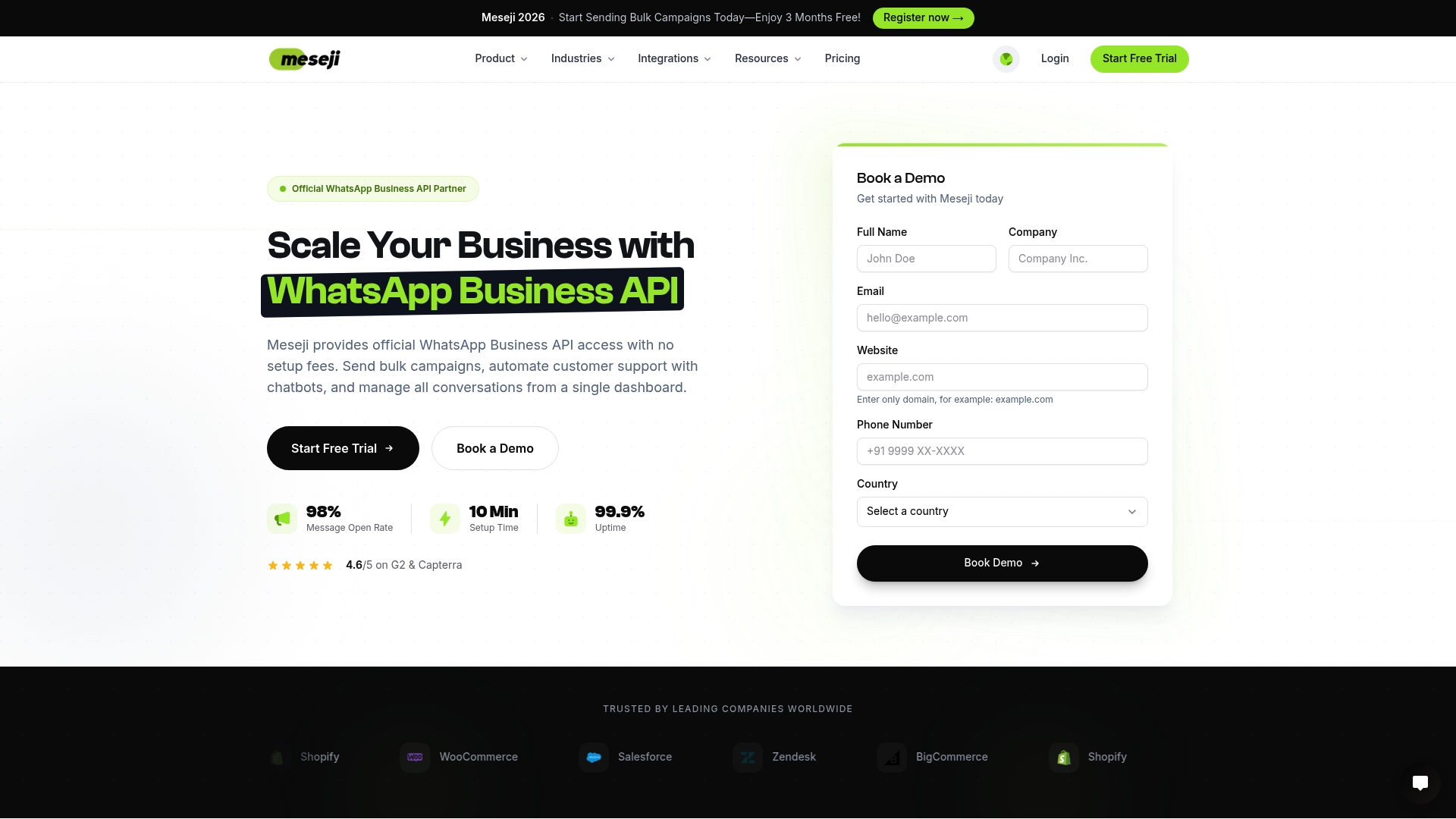
Meseji’s marketing materials claim a 98% message open rate and a setup time under 10 minutes. The vendor also advertises 99.9% uptime. Those two claims frame Meseji as a deliverability-first WhatsApp Business API option with rapid activation.
Core Features
- No-code Chatbot Builder with drag-and-drop flow design for automated support and lead qualification.
- Shared Team Inbox that consolidates conversations and lets agents pick up tickets without switching dashboards.
- Real-time Analytics dashboards for campaign performance, open rates, and funnel metrics.
- Bulk Broadcast Campaigns for unlimited contacts, API access for custom workflows, and Green Tick verification support.
Key Differentiator
Official WhatsApp Business API access with no setup fees is the product’s central claim. That removes an upfront barrier many vendors charge for and speeds onboarding for teams that want production-ready messaging without heavy vendor integration work.
Meseji pairs that approach with broad connector support, which helps companies map messaging into existing commerce and CRM systems quickly.
Pros
- Fast onboarding. The quick setup claim above makes pilot campaigns possible within a day rather than weeks, which matters for seasonal promos.
- Deep commerce hooks. Integrations with Shopify and WooCommerce let marketing teams trigger abandoned cart and order update flows from the same inbox.
- Team collaboration. The shared inbox reduces missed replies and simplifies handoffs between chatbots and live agents.
- Analytics visibility. Real-time dashboards make it easier to iterate message templates and measure campaign lift.
- Cost posture. Pricing starts low enough for many small teams to test before scaling.
Cons
- Not ideal for ultra high-volume enterprises without customization. Buyer reviews indicate heavy-volume customers may need bespoke rate or routing solutions.
- Template customization limits. Some users report plan-dependent restrictions on how much you can tailor templates and message layouts.
- Pricing nuance. Small businesses should compare plan features closely because cheaper tiers may omit important integrations or advanced automation.
When It May Not Fit
If your platform sends tens of millions of messages a month or requires bespoke delivery SLAs, Meseji may need a custom engagement. Also, startups on tight budgets should map feature needs against plan limits before committing.
Notable Integrations
- Shopify
- WooCommerce
- Salesforce
- BigCommerce
- Stripe
- Magento
- Google Sheets
- Zapier
These connectors let you trigger campaigns from commerce events, sync contacts, and pipe conversation data into CRMs or spreadsheets without custom middleware.
Who It’s For
Small and medium businesses, ecommerce retailers, and enterprise teams that want official WhatsApp API access without an onboarding fee. Teams that rely on commerce integrations and want a shared agent inbox will gain the most.
Real World Use Case
An ecommerce retailer uses Meseji to tie Shopify order events to WhatsApp flows. Abandoned cart messages, order confirmations, and shipping updates run from a single dashboard, while the shared inbox lets agents step into conversations when the bot needs human support.
Pricing
Plans start from ₹999 per month with annual billing. The vendor lists plan details and feature mappings on the pricing page so you can compare which tier includes API access, template allowances, and team seats.
Website: https://meseji.app/lp/whatsapp-business-api-platform
Turbodev WhatsApp CRM
At a Glance
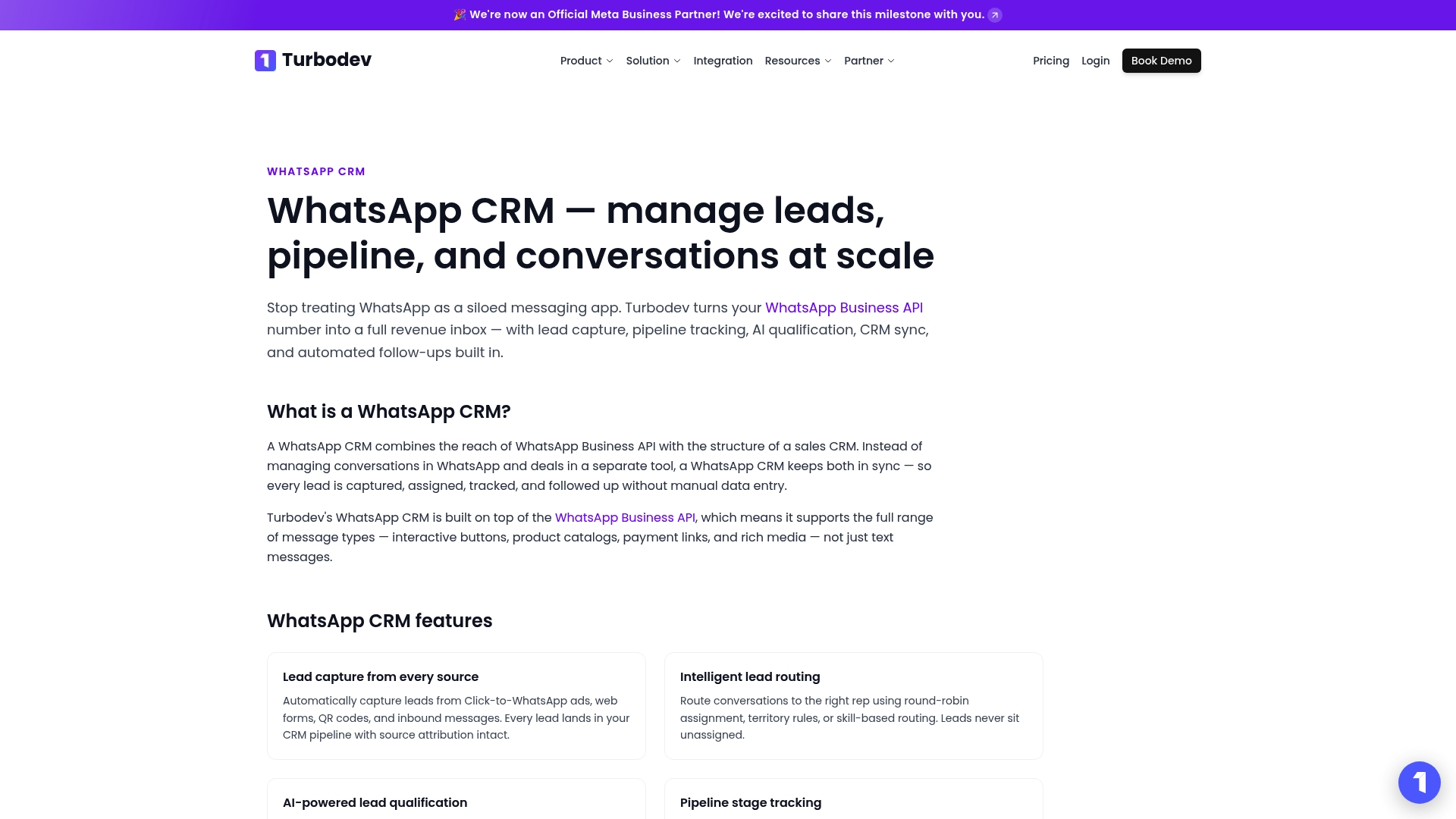
Turbodev advertises native INR billing and UPI payments alongside WhatsApp messaging, a useful detail for India-focused merchants. It is a verified Meta Business Partner and focuses on AI agents plus CRM sync to move leads through a pipeline without switching channels.
Short setup. High throughput.
Core Features
- WhatsApp Business API integration for large scale messaging and interactive templates.
- AI-powered chatbots and agents for lead qualification, routing, and 24/7 first responses.
- No-code automation workflows to run drip campaigns, auto-replies, and multi-step sequences.
- Shared team inbox for collaboration, SLA tracking, and assignment.
- CRM sync with HubSpot, Zoho, Salesforce and campaign tools for click-to-WhatsApp ads and broadcast analytics.
- Native payment support and connectors for Razorpay, UPI and e-commerce platforms.
Key Differentiator
Turbodev combines direct WhatsApp Business API access with built-in CRM synchronization and AI automation tailored for Indian and international compliance requirements. That combination keeps conversation state inside WhatsApp while writing back to CRM pipelines, reducing manual updates and context switching.
Pros
- Deep WhatsApp support lets teams send rich media and interactive messages without workaround. That lowers friction for sales and support messaging.
- AI agents handle initial lead qualification and basic support, cutting repetitive replies and freeing human agents for complex cases.
- Native CRM sync reduces duplicate data entry by writing leads and conversation history to HubSpot, Zoho, or Salesforce automatically.
- Campaign features like click-to-WhatsApp ads and broadcast analytics let marketers measure message performance inside the same workflow.
- Transparent Meta conversation charges and India-ready payment options make budgeting clearer for teams billing in INR.
Cons
- Entry pricing may be high for solo operators or micro businesses compared with consumer messaging tools.
- Some advanced automations require technical setup or API familiarity, which raises onboarding time for nontechnical teams.
- Higher tier features, including enterprise-grade automations, are gated behind pricier plans and add-ons.
When It May Not Fit
If you are a solo seller with very low monthly message volume, the platform’s price and setup overhead will likely outweigh the benefits. If your team lacks any engineering support, expect a learning curve for webhook and API-based integrations. Choose a lighter tool if you only need simple one-to-one chat without CRM writing.
Notable Integrations
- HubSpot
- Zoho CRM
- Salesforce
- Google Sheets
- Zapier
- Make
- REST API and Webhooks
Who It’s For
Businesses from small to enterprise that need to automate WhatsApp as a sales, marketing, and support channel while keeping CRM records in sync. Especially relevant for companies billing in INR or using UPI and operating in Indian markets.
Real World Use Case
A real estate agency routes leads from Facebook ads into Turbodev, where AI agents prequalify prospects, schedule viewings via WhatsApp, and push contact and status into the agency CRM. Human agents receive only qualified calls and fewer follow-ups are missed.
Pricing
Plans start at ₹1,299/month for Basic with Growth, Pro, and Enterprise tiers available. Billing can be monthly or annual and Turbodev offers custom enterprise pricing and add-on options for higher message volumes.
Website: https://turbodev.ai/whatsapp-crm
Ontell
At a Glance
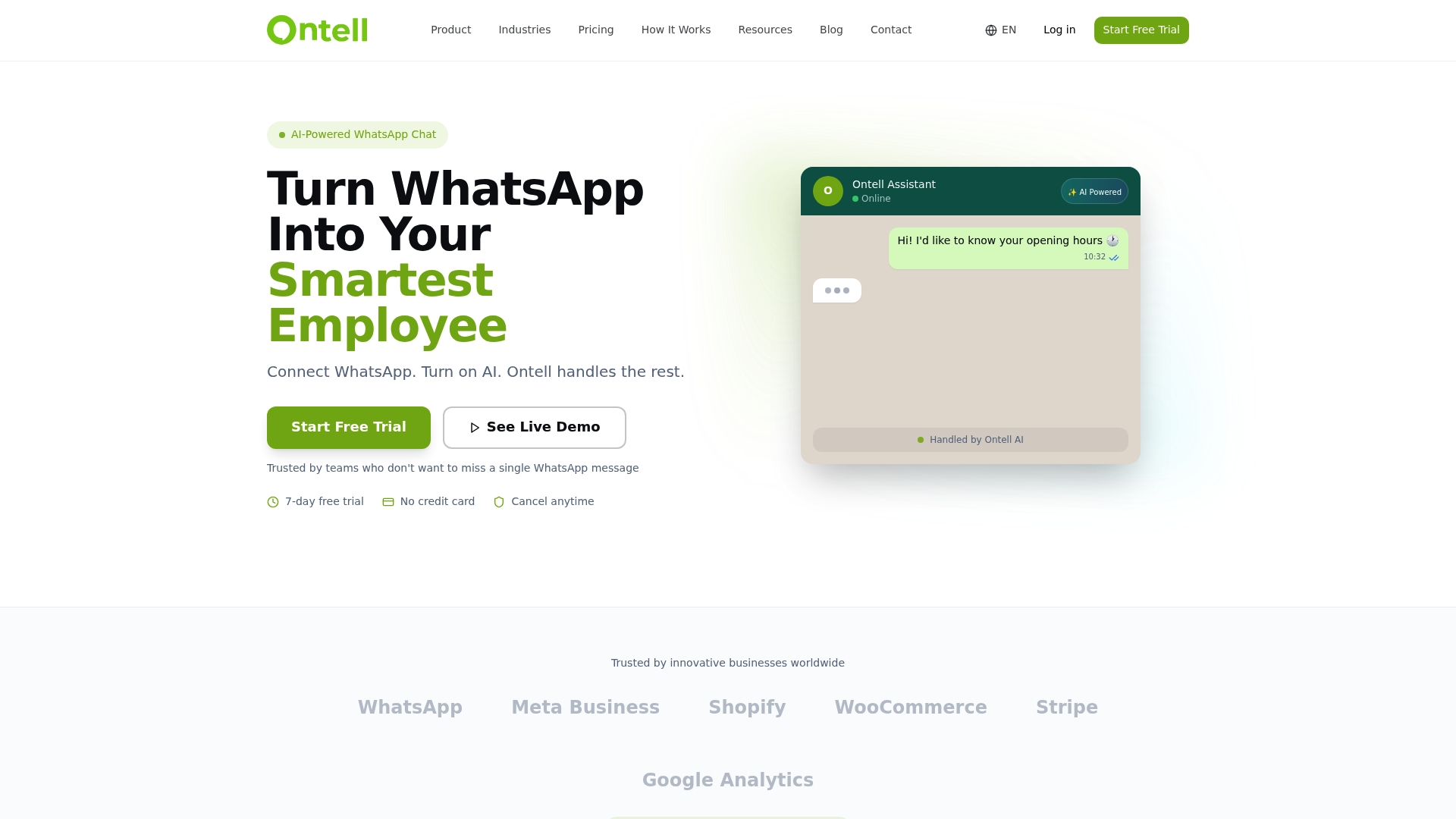
Ontell offers monthly plans starting at $19 for the Starter tier, a clear entry point for teams experimenting with WhatsApp automation. The platform positions itself around AI chat that responds contextually and supports multiple languages.
Core Features
Ontell delivers AI-powered natural language understanding that interprets customer intent rather than relying on rigid scripts.
- Instant, context-aware replies that keep thread continuity across messages.
- Unified inbox for agents to manage multiple conversations in one place.
- Mass broadcasts with audience segmentation and realtime response analytics.
Key Differentiator
Ontell emphasizes conversational NLU over keyword matching so bots sound less robotic and handle follow ups with context. That design reduces the need to author long decision trees and lets agents pick up conversations without losing prior intent.
Pros
- Handles everyday customer questions with minimal manual intervention, which reduces routine ticket volume for support teams.
- Escalation to human agents is built in, so complex queries route to people without breaking the user experience.
- Multilingual support covers multiple dialects, helping teams reach broader markets without separate language stacks.
- Setup is straightforward and pairs quickly with a WhatsApp Business number, so pilot projects get live fast.
Cons
- Reliance on AI accuracy means specialized industry jargon may require manual training and ongoing tuning.
- The free tier is limited; serious volume or advanced features require higher plans.
- Extremely nuanced complaints or legal queries can exceed the bot’s safe handling and still need full agent intervention.
When It May Not Fit
If your product support requires heavy domain specific language such as clinical terminology or regulated financial wording, Ontell’s out‑of‑the‑box model will need substantial training.
Also, businesses that cannot provide a stable WhatsApp Business number or reliable internet connectivity will face operational gaps with message delivery and agent handoffs.
Notable Integrations
- WhatsApp Business is the primary integration for message delivery and identity management.
The platform focuses on WhatsApp, so if you need broad omnichannel inboxes you will need additional tooling.
Who It’s For
Customer support teams, small and mid market e-commerce brands, and SMBs that want to automate routine WhatsApp conversations while keeping easy escalation paths to humans. Teams that value fast pilots and multilingual reach will get the most immediate value.
Real World Use Case
An online store wires Ontell to its WhatsApp Business number to send order updates, answer common FAQs, and run cart recovery sequences. Agents intervene on more complex returns. The result is faster first replies and fewer manual status checks.
Pricing
Monthly plans start at $19 for Starter, $49 for Growth, and $99 for Ontell Pro. Each tier increases reply volume, team seats, and feature access, with a free trial available to test core capabilities.
Website: https://ontell.ai
Comparative Analysis
When evaluating Whatsable alongside its competitors such as Meseji 2026, Turbodev WhatsApp CRM, and Ontell, key differentiators emerge that help businesses identify the platform best suited to their specific automation and communication needs.
Integration Breadth and Customization
Whatsable offers a set of integrations with platforms like Zapier, n8n, and Pipedrive, making it an excellent choice for teams aiming to blend WhatsApp automations into their existing CRM workflows. Comparatively, Meseji supports Shopify and WooCommerce, specifically appealing to e-commerce teams needing direct hooks between their order systems and customer messaging. Meanwhile, Turbodev excels in automated updates with CRM platforms like Salesforce and Zoho, focusing on lead qualification within WhatsApp while synchronizing customer data comprehensively.
Onboarding Experience and Setup Time
Ease of onboarding is crucial when deploying new platforms. Whatsable’s simplified no-code setup enables organizations to activate essential tools within minutes, significantly reducing the time to launch compared to manual API integrations. However, Meseji’s strikingly fast setup time, aided by the absence of upfront WhatsApp Business API fees, makes it appealing to smaller teams or tightly budgeted startups.
Best Fit by Business Scenario
- Whatsable is ideal for teams looking to scale targeted WhatsApp campaigns while preserving granular control over costs and requiring streamlined AI-driven automation tools.
- Meseji is better suited for e-commerce teams needing direct commerce platform connections and fast onboarding without up-front costs.
- Turbodev is the choice for businesses in Indian markets requiring UPI payments, CRM synchronization, and advanced lead qualification within the WhatsApp interface.
- Ontell fits small to medium-sized businesses prioritizing conversational AI capabilities to address multilingual support needs efficiently without high technical overhead.
Our Pick
While Whatsable emerges as the most well-balanced solution for general business communication on WhatsApp due to its integrated functionalities and predictable pricing, specific cases may favor competitors. For example, e-commerce teams tied closely to stores like Shopify will find Meseji’s integrations indispensable. Ultimately, the decision rests on synchronizing the chosen platform’s offerings with the operational priorities of the organization.
WhatsApp Messaging Automation Platforms Comparison
When selecting a platform for automating WhatsApp messaging, consider the features that best align with your team’s notification and engagement needs.
| Product | Key Features | Best For | Pricing | Notable Limitation |
|---|---|---|---|---|
| Whatsable | AI chatbots, Smart Broadcasting, CRM integrations | Teams needing scalable automation | $49/month for 500 numbers | Costs can increase with extensive usage levels |
| Meseji 2026 | No-code chatbot builder, real-time analytics, e-commerce integrations | Small businesses utilizing commerce flows | ₹999/month | Limited template customization for lower plans |
| Turbodev WhatsApp CRM | API access, CRM sync, click-to-WhatsApp ad support | Businesses prioritizing CRM and payments | ₹1,299/month | Requires technical familiarity for advanced setups |
| Ontell | Contextual AI chat, multilingual support, unified inbox | Teams automating FAQ responses | $19/month for Starter plan | Extensive jargon requires AI model adjustment |
Discover a Powerful Alternative to startautomate.com with Whatsable
If you are searching for reliable startautomate.com alternatives that combine ease of use with deep automation power Whatsable offers a solution built to reduce the complexity of WhatsApp messaging for businesses of all sizes. Whatsable addresses key challenges like bulk messaging risks manual follow-ups and integration hurdles by providing AI-powered chatbots bulk messaging with anti-block features plus seamless connections to Zapier Make n8n and Pipedrive.
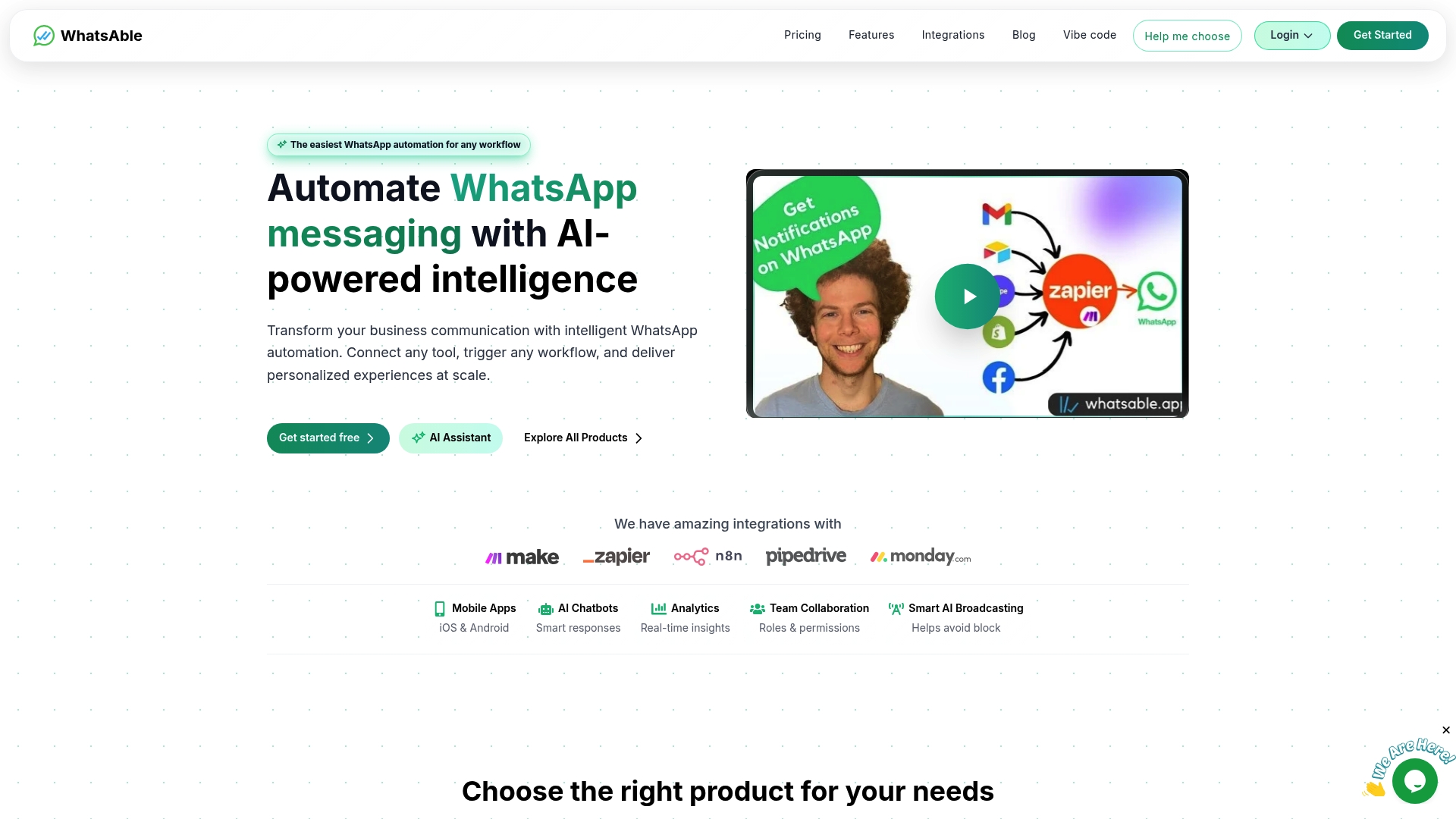
Explore how Whatsable lets you automate targeted campaigns and internal alerts with fast setup and human onboarding support Visit Whatsable now and experience predictable pricing starting at just $49/month per 500 phone numbers. Take control of your WhatsApp outreach by sending unlimited branded messages and automating follow-ups effortlessly. Get started today to activate smarter workflows and watch engagement improve in under 10 minutes.
Frequently Asked Questions
What unique feature does Whatsable offer for WhatsApp messaging automation?
Whatsable provides automated follow-up sequences triggered by chat or APIs, ensuring timely and efficient communication. This feature is part of Whatsable’s core offerings that also include bulk messaging and Smart Broadcasting, which helps reduce blocking risks during campaigns. Teams looking for consistent outreach and automation should consider Whatsable for its streamlined setup and capabilities.
How does Whatsable compare to Meseji in terms of onboarding speed?
Meseji boasts a setup time of under 10 minutes, making it ideal for teams needing rapid activation for campaigns. In contrast, Whatsable also offers quick onboarding, with Personal Bot set up in around 3 minutes and Notifyer in about 10 minutes, making it a strong contender for those looking to get started swiftly. If fast deployment is critical, both platforms offer compelling options.
Which platform features a shared inbox for team collaboration in WhatsApp messaging?
Meseji includes a shared team inbox that consolidates conversations, allowing agents to pick up tickets without switching dashboards. While Whatsable focuses on real-time notifications and team roles, Meseji’s approach enhances collaboration for support teams. Businesses prioritizing team interactions may find Meseji’s shared inbox more effective.
What are the pricing tiers for Whatsable, and how do they support scalability?
Whatsable starts at $49 per month for every 500 unique phone numbers, making it easier to predict campaign costs as your messaging needs grow. This pricing structure is particularly beneficial for teams buying by campaign size rather than user count, allowing for straightforward budget planning as you expand your outreach efforts.
Can I effectively use Whatsable for high-volume messaging campaigns?
Whatsable is designed with a high deliverability focus and includes Smart Broadcasting features to mitigate block risk during large campaigns. This makes it suitable for organizations needing to send mass messages while maintaining high engagement rates. If your requirements involve significant outreach, Whatsable’s focus on deliverability will be beneficial.