 Whatsable






Managing bulk WhatsApp messaging and campaign automation from a business number without losing brand identity is difficult. Many tools restrict bulk messaging, require switching between platforms, or put campaign features behind expensive plans. This comparison covers features, pricing, and setup for four alternatives so teams can pick a platform that fits their needed campaign volume and workflow.
Table of Contents
Whatsable
At a Glance
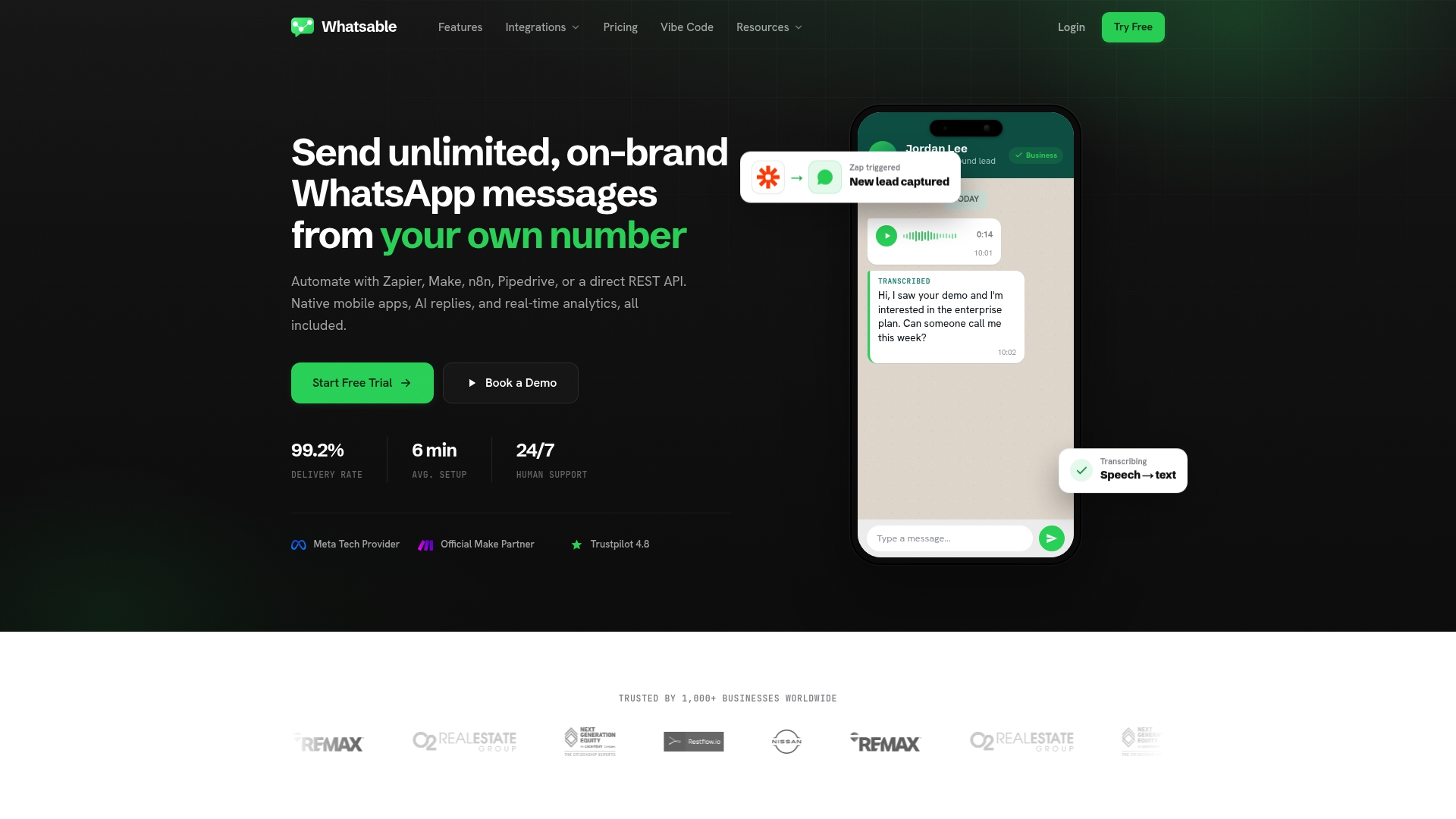
Whatsable reports a typical setup time of about 6 minutes for initial configuration. That setup claim appeals to teams that need fast onboarding without developer support. The platform centers on keeping WhatsApp conversations on your verified business number while adding automation.
Core Features
Whatsable supports unlimited messaging from your own WhatsApp number and persistent number retention so conversations remain on-brand. It provides automation workflows and API access that connect to third-party automators, a shared team inbox with roles and permissions, and an AI assistant for follow-ups, voice transcription, and chatbot responses. The product also includes campaign tools such as broadcast scheduling, smart delivery, QR codes, native iOS and Android apps, desktop access, and real-time analytics on delivery and responses.
Key Differentiator
Seamless integration with live automation tools while sending messages from your own verified WhatsApp number pairs AI assistant features with team collaboration. That combination lets teams keep brand authenticity while using automated follow-ups and shared inbox workflows. The integrations and number retention reduce the friction of adding WhatsApp into existing processes.
Pros
That setup time and no-developer onboarding lower the hurdle for small teams and agencies. Whatsable supports automation through Make, Zapier, and n8n, which keeps existing workflows intact while automations run. The platform keeps conversations on your business number and adds AI features and team roles so sales, support, and marketing can collaborate without handing off channels.
Cons
- Managing high message volume requires careful pacing to avoid WhatsApp blocking.
Notable Integrations
- Make
- Zapier
- n8n
- Pipedrive
- Monday.com
Who It’s For
Businesses that need to automate customer communication on WhatsApp while keeping their own number and brand presence will benefit most. The platform fits solo entrepreneurs, marketing agencies, and enterprise teams that need integrations, team inbox controls, and AI-assisted replies. If your workflows already use Zapier or Pipedrive, integration work will be minimal.
Unique Value Proposition
Unlimited messaging from your own WhatsApp number keeps conversations under a single, persistent business identity. That approach reduces confusion for customers and preserves branded threads while automations handle follow-ups and bulk campaigns. Teams get economic value from fewer support handoffs and clearer message ownership when one number handles marketing, sales, and support.
Real World Use Case
A real estate agency connects its CRM and calendar to Whatsable, automates lead follow-ups through scheduled sequences, and lets agents share a team inbox for viewing requests. The AI assistant handles initial screening and voice transcription for incoming inquiries. Agents continue replies from the same verified number so clients see consistent contact information.
Pricing
The Bulk Message plan starts at $19/month and includes bulk messaging without integrations. The Pro plan costs $49/month and adds automation, team features, and third-party integrations. An Agency plan offers white-label and multi-account management features.
Website: https://whatsable.app
Gupshup
At a Glance
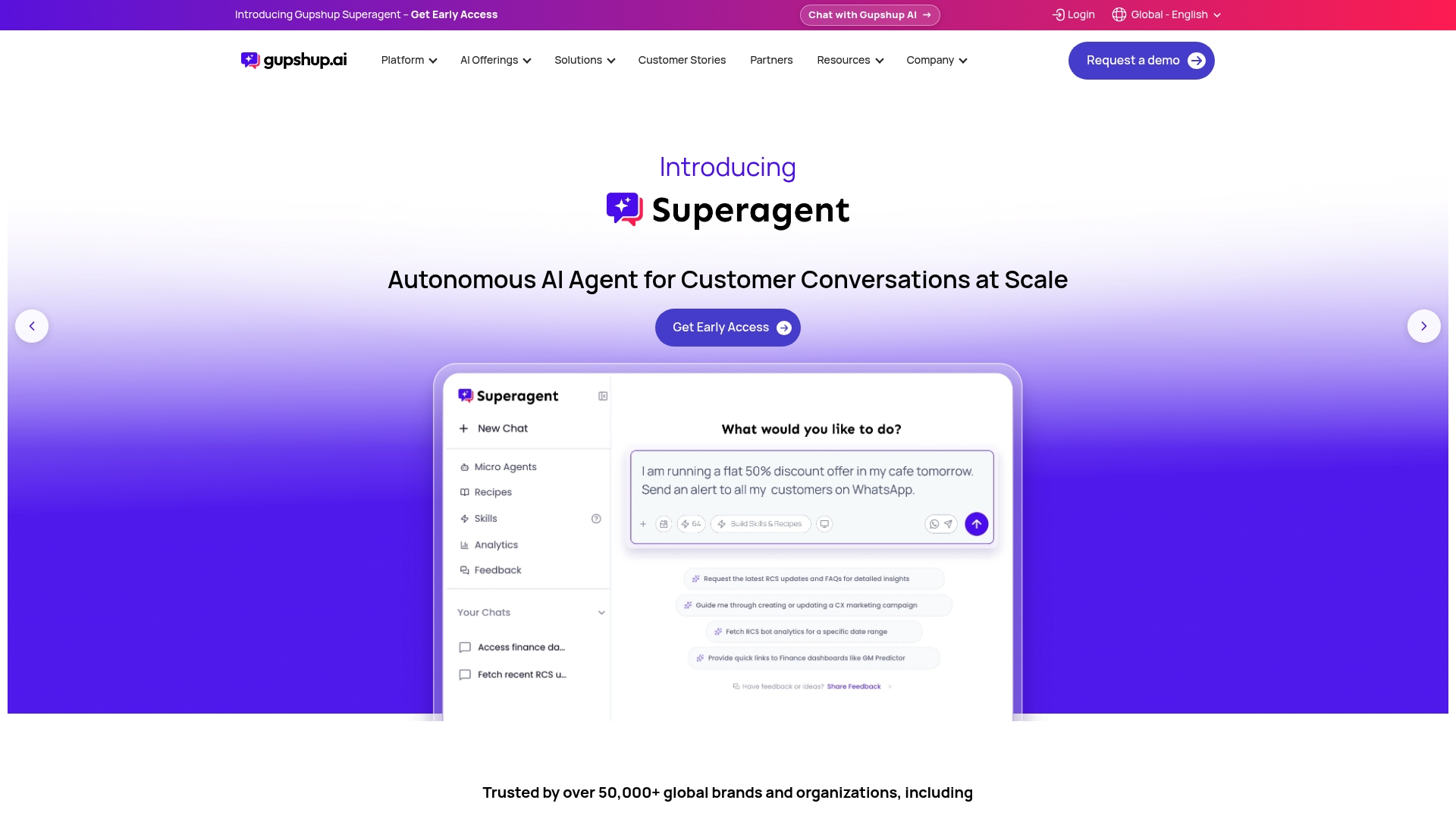
Gupshup reports handling more than 120 billion messages annually. The vendor reports serving over 50,000 organizations, which places it among the larger multichannel messaging platforms and a viable chatimize.com alternatives pick. It focuses on WhatsApp, SMS, Instagram, and RCS for marketing, support, and commerce workflows.
Core Features
Omnichannel messaging covers WhatsApp, SMS, Instagram, and RCS and ties those channels into automated drip campaigns triggered by third party events. The platform offers AI powered chat and voice agents alongside an AI Co Pilot that helps human agents handle volume. Personalized messages use lifecycle stage data to raise relevance for marketing and support.
Key Differentiator
Gupshup emphasizes industry trained AI agents that drive personalized conversations across channels. That training focus separates it from pure message gateways and aims to reduce hands on scripting for common customer intents.
Pros
The platform centralizes multiple channels under a single API, which cuts integration work for engineering teams. Channel breadth makes it easier to run unified campaigns and deliver transactional updates without stitching multiple vendors together. Third party reviews often praise the onboarding and customer support responsiveness, which helps teams adopt the product faster.
Cons
- High pricing compared to some competitors may make it costly for smaller budgets.
- Non intuitive user interface for the bot builder can slow bot creation for less technical teams.
- Reporting features could be more robust for teams that need advanced analytics.
- Customer support response times can be slow at times.
When It May Not Fit
Small businesses or startups with tight budgets may find the pricing prohibitive. Teams that want a drag and drop bot builder with minimal learning may struggle with the UI. Organizations that require deep analytics for product or growth experimentation may need an additional reporting tool.
Who It’s For
Mid to large sized enterprises and digital first brands that need scalable multi channel messaging and AI automation will find Gupshup matches their scale requirements. Marketing, support, and commerce teams that send high message volumes benefit from its channel coverage. Businesses that prefer centralized API control for integrations will also fit well.
Real World Use Case
A retail brand routes customer support into AI powered assistants and sends order updates on WhatsApp while running lifecycle based marketing across Instagram and SMS. The brand reduces manual replies for common questions and uses personalized drip campaigns to recover abandoned carts.
Pricing
Pricing uses a fixed per message fee. Gupshup advertises rates as low as $0.001 per message, with WhatsApp fees charged at actuals and channel rates varying by platform. Enterprises should model volume to estimate monthly cost.
Website: https://gupshup.ai
SleekFlow
At a Glance
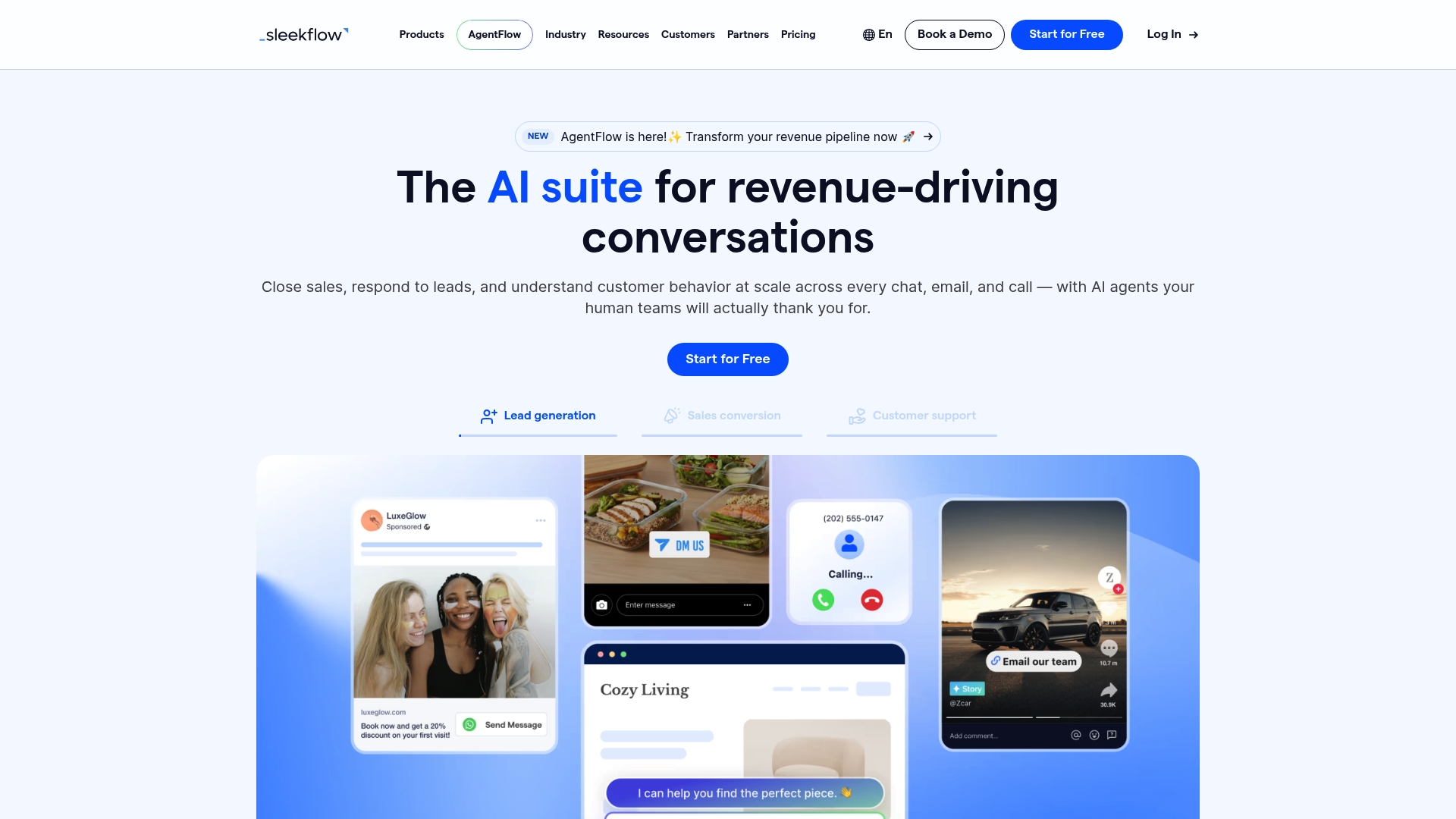
The vendor advertises SleekFlow as an official WhatsApp Business Solution Provider. SleekFlow reports being used by more than 2,000 enterprises worldwide. The platform targets multichannel sales and support with AI agents that move conversations toward conversion.
Core Features
SleekFlow centralizes messages with an Omnichannel Team Inbox and a Live Chat AI widget for websites, while a ticketing system tracks pre sales inquiries. The platform includes analytics for chat and conversion metrics and tools for in chat selling such as Catalog & Payment Links. Automation Flow Builder and broadcast campaigns help automate follow ups and mass messaging.
Key Differentiator
That provider status gives SleekFlow direct access to WhatsApp features that many competitors lack. This focus on official WhatsApp integration pairs with built in e commerce connectors and agentic AI for automated sales conversations. The result targets teams that rely heavily on messaging channels for revenue.
Pros
The interface is easy to learn and keeps messages from multiple channels in one view, which reduces context switching for sales and support teams. Automation templates manage lead routing and follow ups, cutting manual work for agents. Commerce features integrate with storefronts, and customer service reports in the data show a responsive vendor support team.
Cons
-
Performance can slow under heavy load, causing occasional lag and timeouts.
-
Pricing can grow steep as you add features or seats, making total cost higher for larger teams.
-
Reporting and analytics lack some advanced options, and message editing is not supported in reports.
-
Complex automation flows carry a steep learning curve for teams without technical resources.
When It May Not Fit
If your operation runs very high concurrent traffic and needs ironclad latency, the reported performance issues may cause problems. If you need deep, customizable analytics for billing or compliance, the built in reports may not meet requirements. Small teams on tight budgets may find the tiered pricing model expensive as you scale.
Notable Integrations
-
WhatsApp Business API
-
Shopify
-
Facebook Messenger
-
Instagram
-
Viber
-
Telegram
-
Vtex
-
WeChat
Who It’s For
Medium and large enterprises that need to unify multiple messaging channels and automate customer engagement at scale will get the most value. Retail and ecommerce brands that sell directly in chat benefit from catalog and payment link features. Service providers that handle high message volumes can use the ticketing and automation tools to route and resolve inquiries.
Real World Use Case
A retail brand links WhatsApp and Instagram to SleekFlow and pushes product catalogs into chat. Automated follow up sequences re engage shoppers who abandon conversations. That setup increased conversion opportunities and improved response times for customer questions.
Pricing
Pricing is not publicly listed. The vendor indicates plans are custom or tiered and vary by features and user counts, so expect quotes based on required channels and seats.
Website: https://sleekflow.io
Interakt
At a Glance
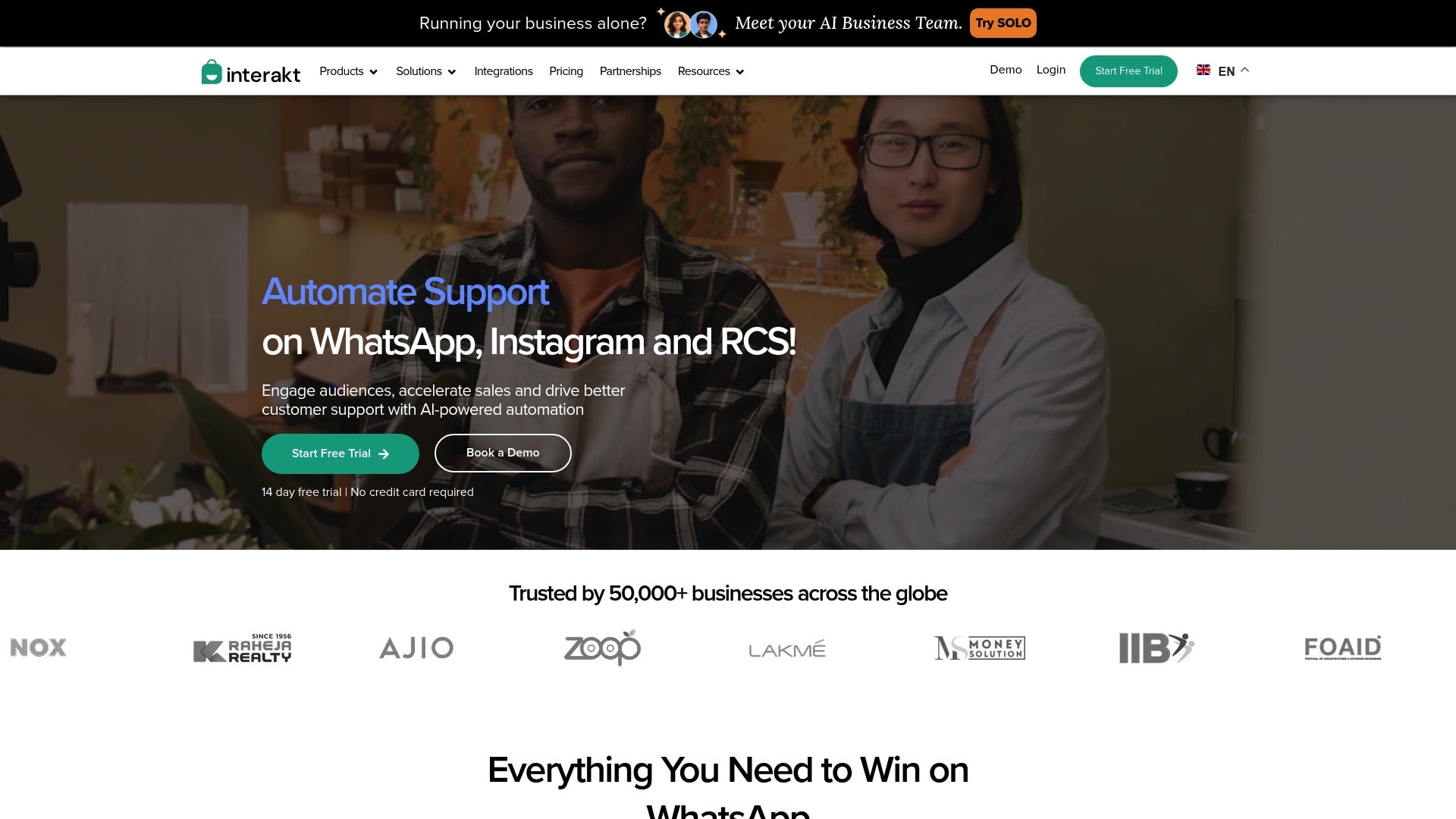
WhatsApp, Instagram, and RCS conversations arrive in a single omnichannel inbox. The platform pairs that inbox with AI workflows for lead qualification and support. That focus makes Interakt appealing to e-commerce teams handling high chat volume and campaign-driven messaging.
Core Features
Interakt combines AI-powered chatbots, an omnichannel messaging inbox, and a WhatsApp CRM to handle sales, support, and marketing workflows in one place. Automation covers click-to-WhatsApp ads, order and payment flows, and intent driven messaging templates. The analytics dashboard tracks team activity and campaign performance.
Key Differentiator
Interakt centers its product on WhatsApp marketing, sales, and support with industry templates tuned for retail and hospitality. Its vertical focus on conversational commerce separates it from broader messaging stacks. Compared with Whatsable, Interakt leans toward campaign-driven, front-line chat operations rather than deep enterprise integration and internal notification tooling.
Pros
Interakt bundles chat automation and CRM features in a way that reduces the number of separate tools a small team needs. The platform includes prebuilt templates and workflows that speed campaign setup and lead qualification. Flexible integrations with common e-commerce platforms simplify connecting order and customer data to conversations.
Cons
- Severe dissatisfaction appears in user reviews about customer support access after signup. These reports describe slow or hard to reach responses.
- Users complain about billing transparency and unexpected charges, which creates distrust during onboarding. Billing issues show up repeatedly in feedback.
- Mixed accounts of platform stability and connection bugs suggest the product may require monitoring at scale. Some teams report intermittent message delivery problems.
- Perceived aggressive or nontransparent sales practices have been reported, which may affect buying confidence.
When It May Not Fit
If you need guaranteed enterprise grade uptime and formal SLA terms, Interakt may not be the right choice. Teams that require transparent billing and a documented enterprise procurement flow should look elsewhere. High volume operations that demand rock solid connection stability may encounter limits.
Notable Integrations
Interakt lists direct integrations with Shopify and WooCommerce, plus Instagram and RCS support. Additional connections are available via the platform API for custom toolchains.
Who It’s For
Interakt fits small to medium sized e-commerce brands, retail merchants, and hospitality operators that rely on conversational sales and fast customer replies. Marketing teams running click-to-WhatsApp campaigns will find the templates useful. Support teams that need a unified inbox across social channels will get the most value.
Real World Use Case
A fashion e-commerce brand uses Interakt to route order queries into a single inbox and to qualify leads with AI workflows. The brand runs segmented WhatsApp campaigns that link directly to product pages. Customer service agents handle returns and payments without switching tools.
Pricing
Pricing is not explicitly detailed on the vendor site. The company notes plans vary by usage and connected integrations, and some free trials are available. Companies should request a custom quote and confirm billing terms before committing.
Website: https://interakt.shop
Comparison of alternatives
Choosing the right service for WhatsApp messaging automation depends on evaluating trade-offs between ease of use, feature comprehensiveness, and scalability. The following analysis highlights strengths and limitations among the featured competitors:
Comparing setup, integration, and scalability
Whatsable emphasizes rapid setup with capabilities to retain a verified WhatsApp business number, making it highly attractive for small teams or organizations needing fast implementation. Conversely, Gupshup demonstrates advantages with its expansive multi-channel connectivity and sophisticated event-driven engagement, best suited for large enterprises. SleekFlow balances e-commerce-focused needs with multi-use-case dashboards, while Interakt strongly caters to retail-based scenarios requiring versatile templates and integration simplicity.
Analysis of cost structures and feature overload
Whatsable provides a flexible tier system favoring both entry-level users and scale-seeking businesses, focusing specifically on WhatsApp. Conversely, Gupshup’s flexible usage-based pricing might become extensive, although offset by its multi-channel capabilities and AI tools targeting specific use cases. SleekFlow exhibits concerns around pricing transparency and capacity limits, while Interakt poses issues of billing clarity alongside platform performance concerns as noted in reviews.
Best fit
- For organizations requiring unlimited messaging capacity backed by verified WhatsApp credentials without the dependency on advanced IT resources, Whatsable is an excellent choice.
- Medium-to-large enterprises desiring multi-channel communication, scalability, and centralized API functionality will value the features Gupshup offers.
- Retail teams focusing on catalog-based chat commerce and CRM integration benefit significantly from SleekFlow’s use-case optimizations.
- Budget-conscious e-commerce entities inclined toward prebuilt campaign-driven WhatsApp workflows will appreciate Interakt.
Our pick
For its exceptional blend of ease of setup and functional range, Whatsable is best for teams prioritizing WhatsApp automation with minimal friction during onboarding. However, organizations seeking broader channel reach or tailored enterprise-grade presentation might explore Gupshup’s alternatives instead.
Automating WhatsApp communications depends on factors including tools integration and pricing models. Consider the options below based on their usage scenarios.
| Platform | Key Features | Best For | Pricing | Notable Limitation |
|---|---|---|---|---|
| Whatsable | Unlimited messaging from own number, AI assistants | Teams needing automation and branding | from $19/month | High message volume requires pacing |
| Gupshup | Multichannel messaging, AI-powered agents | Large enterprises with scaled workflows | $0.001 per message | Non-intuitive bot builder interface |
| SleekFlow | Omnichannel inbox, E-commerce connectors | Retail and e-commerce brands | Price not published | Performance issues under heavy load |
| Interakt | WhatsApp CRM, AI chat templates | Small e-commerce and hospitality setups | Price not published | Reports of billing transparency concerns |
Choosing the Right WhatsApp Automation Among Chatimize.com Alternatives
Many businesses face challenges automating WhatsApp messaging while keeping their own number and brand identity. The key pain points include quick onboarding without developer help, team collaboration with role controls, AI-powered follow-ups, and integration with popular tools like Zapier and Pipedrive. Whatsable answers these needs with unlimited messaging from your verified WhatsApp number and built-in automation designed for small to large enterprises and marketing agencies.
Whatsable offers fast setup, AI chat assistants, and a shared inbox that keeps conversations organized across teams. The platform’s connectivity with Make, Zapier, and n8n lets you keep existing workflows intact while automating follow-ups and campaigns with confidence. Visit Whatsable to learn how your team can send unlimited branded WhatsApp messages and improve customer engagement without complexity.
Get started with Whatsable automation and see how easy it is to keep your WhatsApp business conversations consistent and efficient.
FAQ
How does Whatsable improve WhatsApp messaging automation for small teams?
Whatsable offers unlimited messaging from your own WhatsApp number, making it ideal for small teams. This feature ensures that teams maintain brand consistency while automating communications without the need for developer support. Small businesses can start using Whatsable quickly, enhancing communication efficiency right away.
What is the difference between Whatsable and Gupshup regarding message volume handling?
Gupshup excels in handling high message volumes by providing centralized messaging across multiple channels. Whatsable, on the other hand, is particularly suitable for teams that require WhatsApp specific automation while maintaining a single verified number. This makes Whatsable more appropriate for those focusing solely on WhatsApp communications.
Can I use Whatsable for customer engagement while managing team roles?
Yes, Whatsable includes features for shared team inbox management with roles and permissions. This setup allows different team members to collaborate effectively on customer inquiries while automating follow-ups and responses. Teams can efficiently handle inquiries while keeping their branding consistent across communications.
Which platform offers better omnichannel support, Whatsable or SleekFlow?
SleekFlow provides extensive omnichannel channel coverage, integrating multiple messaging platforms for sales and support. While Whatsable focuses on WhatsApp automation, businesses seeking a diverse range of messaging options might find SleekFlow more beneficial. Nonetheless, Whatsable still offers robust features for teams dedicated specifically to WhatsApp engagement.
Does Whatsable include any AI features for messaging?
Whatsable features an AI assistant for follow-ups, voice transcription, and chatbot responses. This enables teams to automate various communication aspects while ensuring they maintain personal engagement. Businesses looking for a tool to enhance their customer communications with AI support will find Whatsable’s capabilities valuable.

 Jonah Reed

 Elias Navarro