 Whatsable







TL;DR:
- WhatsApp offers HR teams a highly effective way to engage frontline and deskless workers through high open rates. It enables real-time feedback on morale, burnout, and safety using permission-based, brief daily questions and multimedia reporting. A GDPR-compliant Business API environment ensures privacy, proper monitoring, and easier integration with existing HR systems for workplace wellness programs.
WhatsApp is one of the most effective tools HR teams have for reaching employees who never open corporate email or log into enterprise apps. With a message open rate reaching up to 98%, compared to around 20% for corporate email, WhatsApp is dramatically more effective for reaching frontline and deskless workers where they already spend their time. The role of WhatsApp in employee wellness programs goes well beyond sending announcements. Done right, it creates a daily feedback loop that gives HR a real-time picture of morale, burnout risk, and safety concerns across the workforce.
The most effective programs share a few traits:
- Permission-based daily nudges that take under 30 seconds to complete, replacing stale quarterly surveys
- Two-way communication where employees respond with emoji ratings or short text, not just receive broadcasts
- AI-powered analysis of aggregated responses to detect early burnout signals and morale dips
- Explicit opt-in consent so participation feels respectful, not mandatory
- WhatsApp Business API deployment with GDPR-compliant architecture for auditable, governed communication
How WhatsApp supports employee wellness programs
The practical applications of WhatsApp for employee support span industries and job types, but the pattern is consistent: it removes the adoption barrier that kills every other engagement tool for frontline workers.
- Deskless worker reach. Manufacturing, healthcare, retail, and logistics employees check WhatsApp constantly but rarely touch corporate platforms. WhatsApp meets them where they already are.
- Real-time feedback on burnout and safety. A daily one-question nudge captures honest responses on workload stress, team morale, and safety conditions before problems escalate.
- Multimedia reporting. Shift workers can send photos or voice notes to flag equipment issues or near-miss safety events, cutting reporting friction to near zero.
- Stigma-free mental health check-ins. A confidential WhatsApp message asking “How are you feeling today?” carries far less social weight than a formal HR meeting. AI-powered HR chatbots can also book therapy sessions confidentially, recommend wellness content, and offer self-assessment tools, all without employees leaving the app.
- Sector-specific use cases. In healthcare, nurse check-ins at shift start assess staffing stress. In logistics, driver wellbeing checks happen during scheduled breaks. In manufacturing, shift handover notes via WhatsApp eliminate information loss between rotations.
Targeted digital communication campaigns can drive real financial outcomes too. Premise Health used a focused email campaign to boost wellness center utilization by 11%, contributing to $1.5 million in healthcare savings for one client. WhatsApp’s engagement advantage over email suggests the ceiling is higher.
Privacy, compliance, and what employers can actually monitor
WhatsApp’s compliance picture is more nuanced than most HR guides admit, and getting it wrong creates real legal exposure.
- WhatsApp is not HIPAA compliant out of the box. Healthcare organizations cannot use standard WhatsApp for protected health information. However, deploying via the Business API under a GDPR-compliant platform with documented employee consent addresses the core privacy risks.
- Personal group chats are the real compliance risk. Unmanaged employee WhatsApp groups create shadow communication that HR cannot audit, moderate, or control. Banning WhatsApp does not stop those groups; it just makes the compliance problem invisible.
- Employer monitoring has clear limits. Employers cannot read personal WhatsApp messages. A managed Business API channel is different: it is auditable by design, and employees know that going in.
- Consent must be explicit and revocable. No default enrollment, no manager pressure. Employees opt in voluntarily, and they can withdraw at any time. When people choose to participate, participation rates rise because the channel feels respectful rather than invasive.
- Governed channels replace shadow usage. The most GDPR-compliant approach is not to ban WhatsApp but to provide a secure, managed channel via the Business API that replaces informal group chats with auditable, consent-based communication.
How to shift from broadcasting to real listening
Most organizations use messaging apps in wellness programs the wrong way. They push announcements. Nobody reads them, participation drops, and HR concludes that “employees aren’t engaged.” The actual problem is the format.
- Drop the broadcast model. Mass announcements create information overload and train employees to ignore the channel. One focused question per day outperforms fifty unread messages.
- Use daily nudges under 30 seconds. Research on WhatsApp wellness program design shows that single-question daily nudges with anonymous feedback enable early detection of burnout and safety concerns. The interaction is short enough that completion rates stay high.
- Structure questions with purpose. Monday might focus on safety. Tuesday on workload. Wednesday on team dynamics. The questions themselves signal what the organization values, without a top-down announcement.
- Let AI do the pattern recognition. Individual responses stay anonymous, but aggregated data reveals team-level trends. AI identifies declining morale before it shows up in turnover numbers and surfaces recurring themes in open-text responses that no manager could catch manually.
- Close the feedback loop visibly. When employees share honest feedback and nothing changes, they stop sharing. Use the same WhatsApp channel to tell teams what changed because of their responses. That transparency is what keeps participation high over time.
Pro Tip: Add an emoji rating before the open-text question. Emoji responses take one second and dramatically increase completion rates. The AI can then correlate emoji sentiment trends with open-text themes to give managers a richer daily summary.
Integrating WhatsApp into your HR workflows
Getting WhatsApp working inside existing HR systems is more straightforward than most IT teams expect, especially with no-code integration tools.
- Start with the Business API. Consumer WhatsApp has no admin controls, no analytics, and no consent management. The Business API is the foundation for any compliant wellness program.
- Connect WhatsApp data to your HR platform. Tools like Zapier and Make let you route WhatsApp feedback data directly into platforms like Monday.com, Salesforce, or your existing HRIS without writing a single line of code. Managers get daily sentiment summaries in the tools they already use.
- Train employees on privacy and purpose first. The onboarding conversation matters more than the technical setup. Employees need to understand what data is collected, who sees it, and how it stays anonymous before they trust the channel enough to give honest feedback.
- Pilot with one team before scaling. Prove data quality and participation rates with a single department. Use those results to build internal trust, then roll out enterprise-wide with evidence behind you.
- Measure what matters. Track participation rates, sentiment trend lines, and whether flagged issues get resolved. Wellness programs that cannot show outcomes lose budget.
Pro Tip: When piloting, pick a team whose manager is genuinely curious about the data, not just compliant with the rollout. A manager who acts on the first week’s feedback creates a visible proof point that accelerates adoption across the rest of the organization.
The JMIR DIAMANTE trial found that adaptive messaging interventions can reach historically underserved communities by overcoming barriers like language, geography, and time constraints, reinforcing why mobile-first, personalized communication matters for workforce wellness.

Whatsable makes WhatsApp wellness programs easier to run
Running a compliant, AI-powered WhatsApp wellness program from scratch takes time your HR team probably does not have. Whatsable handles the infrastructure so you can focus on the program itself.
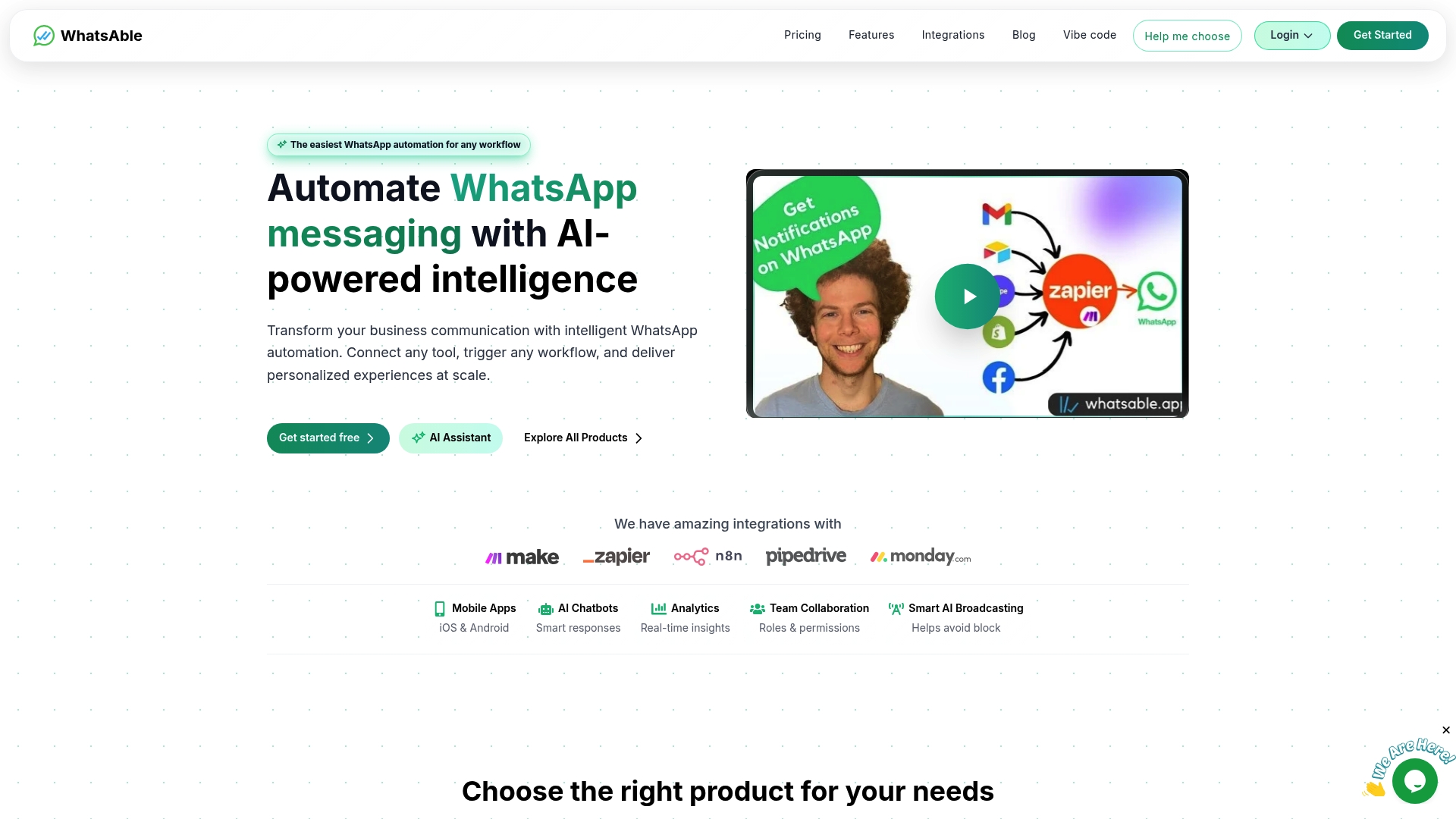
Whatsable’s platform connects to the WhatsApp Business API with built-in GDPR compliance, explicit opt-in flows, and documented consent management. You get automated daily nudges, AI-driven sentiment analysis, and custom coaching messages without building anything from scratch. No-code integrations with Zapier, Make, n8n, and Pipedrive mean your wellness data flows directly into the HR tools your team already uses. Onboarding support and dedicated human customer service are included, so your first pilot does not stall on a technical question. Check the Whatsable pricing page to see which plan fits your team size and program goals.
Key takeaways
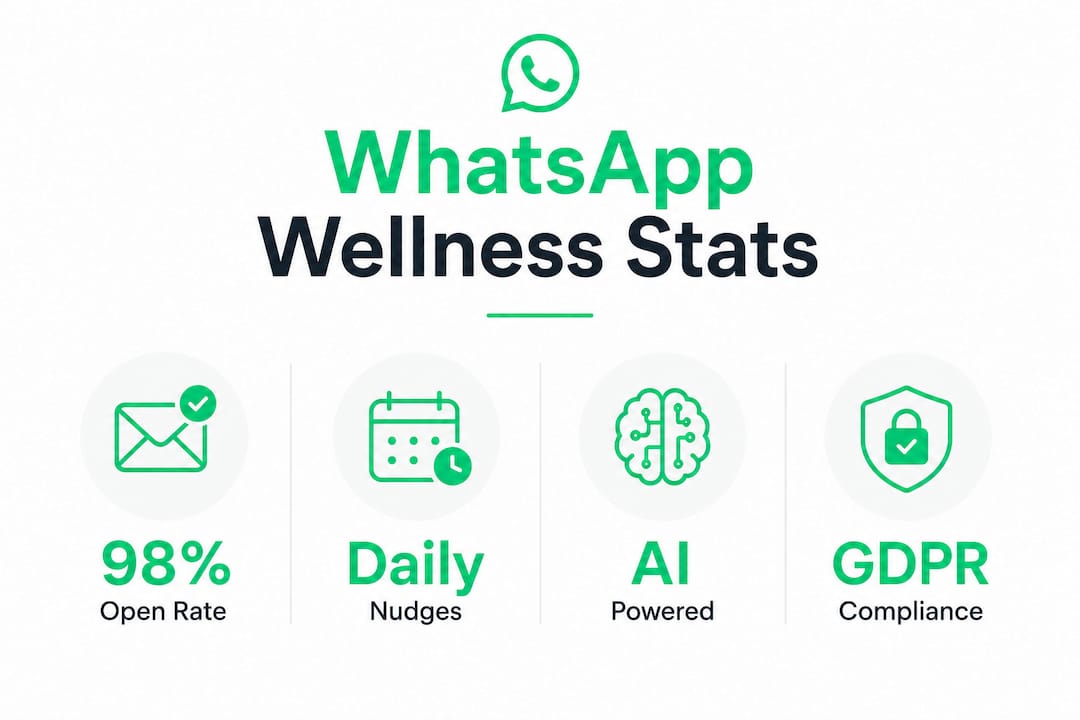
WhatsApp’s role in employee wellness programs is most effective when it combines permission-based daily nudges, AI-powered listening, and GDPR-compliant Business API infrastructure rather than broadcast messaging.
| Point | Details |
|---|---|
| Open rate advantage | WhatsApp messages reach up to a 98% open rate compared to 20% for email, making it far more effective for frontline workers. |
| Permission-based nudges | Daily one-question interactions under 30 seconds drive honest feedback and early detection of burnout signals. |
| Compliance requires Business API | Standard WhatsApp is not HIPAA compliant; governed Business API deployment with explicit consent addresses privacy risks. |
| Integration with HR tools | No-code tools like Zapier and Make connect WhatsApp feedback data directly into existing HR platforms for real-time reporting. |
| Whatsable for adoption | Whatsable provides GDPR-compliant WhatsApp automation with AI analytics and no-code HR integrations to simplify program rollout. |
FAQ
Is WhatsApp HIPAA compliant for workplace wellness programs?
Standard WhatsApp is not HIPAA compliant. Healthcare organizations can address this by deploying through the WhatsApp Business API on a GDPR-compliant platform with documented employee consent and auditable communication logs.
Can an employer monitor employee WhatsApp messages?
Employers cannot access personal WhatsApp conversations. A managed Business API channel is different: it is auditable by design, and employees are informed of that before they opt in.
Why do daily nudges work better than wellness surveys?
Short, permission-based daily questions that take under 30 seconds to answer consistently outperform quarterly surveys because completion rates stay high and the data reflects real-time conditions rather than recalled impressions from weeks ago.
What is the 24-hour rule for WhatsApp Business?
The WhatsApp Business API requires that businesses respond to customer or employee-initiated conversations within a limited time window using standard messages. Outside that window, only pre-approved message templates can be sent, which is why automated daily nudges use approved templates to stay compliant.
 Elias Navarro